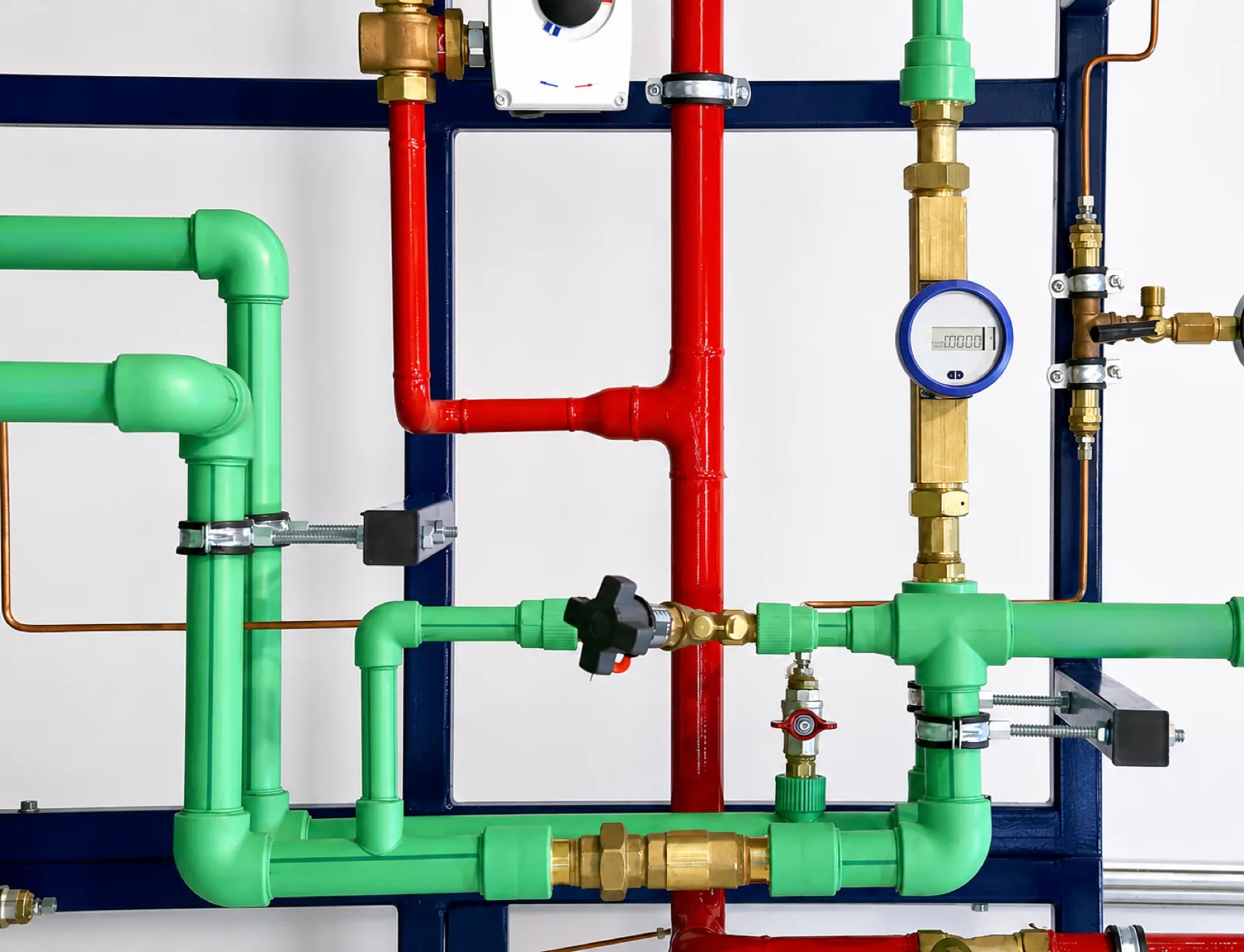
Specify the wrong pipe for a hot-water or process line and it doesn’t just leak — it softens, creeps and fails at the joint under load. PPR is rated for 70°C continuous service (ISO 10508 Class 2), with 95°C permitted only as a 100-hour malfunction excursion. CPVC (806) is pressure-rated to 93°C (PPI TN-62) and resists acids and alkalis. This guide compares the two on temperature, pressure, jointing, corrosion, cost and service life — and gives you a clear rule for when to specify each.
“Which is better” is the wrong question. When you are choosing pipe for a hot-water or process line, the right question is which material fits your operating temperature and medium — because that is where CPVC and PPR genuinely diverge, and where a mismatch turns into softening, creep and joint failure under load. This guide sets the two side by side on the six criteria a specifier actually weighs, then gives you a plain rule for when to reach for each. Note: IFANNova supplies wholesale, project and private-label only.
Read the table below as a decision matrix, not a scoreboard. Each column wins in a different job — CPVC carries the heat and the chemistry, PPR carries the pressure and the potable-water economics. Note in particular that PPR is rated to a higher pressure class (PN20) while CPVC reaches a higher temperature (pressure-rated to 93°C, PPI TN-62): neither material dominates across the board.
| Criterion | CPVC (806) | PPR |
|---|---|---|
| Max temperature | Pressure-rated to 93°C (PPI TN-62) | 70°C continuous (ISO 10508 Class 2); 95°C only as a 100 h malfunction excursion |
| Pressure rating | PN16 | PN20 |
| Jointing method | Solvent cement (chemical bond, no power/welding) | Heat fusion (socket welding, fusion tool) |
| Corrosion resistance | Resists acids, alkalis & aggressive water | Excellent for potable / neutral water |
| Relative material cost | Higher | Lower |
| Service life | 50+ years claimed in our catalogue (design assumption at ambient, not a standard) | Long-life for hot/cold within rating |
| Best-fit jobs | High-temp hot water, industrial/chemical, fire protection | Standard hot & cold water, drinking water, underfloor heating |
Choose CPVC when the line will run hot, aggressive, or both. Its 93°C pressure-rated ceiling (PPI TN-62) and its resistance to acids and alkalis are exactly what PPR cannot offer, and its solvent-cement joints need no welding tool or power on site. Specify CPVC for:
Our CPVC 806 system ships as a complete family — pipe, fittings, ball valves and the dedicated CPVC solvent cement (series 1806) — so the whole high-temperature line is sourced and jointed from one matched system.
If your line runs above PPR’s range or carries anything corrosive, CPVC is the safe specification — and 806 gives you pipe, valves and adhesive as one matched system.
See the CPVC pipe & fittings (806) range
Choose PPR when the job is standard hot and cold water within its range — which is the majority of building plumbing. PPR is non-toxic and drinking-water safe, joined by heat fusion into a homogeneous, leak-free weld, and costs less per metre than CPVC. Specify PPR for:
Our PPR system (series 1103/1138) covers hot and cold water, underfloor heating and HVAC, with fusion fittings matched to the pipe for leak-free welded joints.
If the line stays within PPR’s temperature range and carries potable or heating water, PPR is the cost-effective, drinking-water-safe choice — with fusion joints that don’t leak.
See the PPR pipe & fittings range
The awkward part of the CPVC-vs-PPR decision is usually sourcing: many buyers end up splitting the order across two suppliers because one factory only does one material. IFANNova makes both — a complete CPVC (806) high-temperature system and a complete PPR hot-and-cold system — in one 120,000 m² facility, as a French brand built on European-standard quality. So you specify by application, and source both from one factory: matched systems, one set of export documents, one point of accountability.
| What you need | What we supply | Series |
|---|---|---|
| High-temp / corrosive / fire / industrial | CPVC (806) — pipe, fittings, valves, solvent cement | 1806 |
| Standard hot & cold / drinking water / underfloor | PPR — pipe & fusion fittings | 1103 / 1138 |
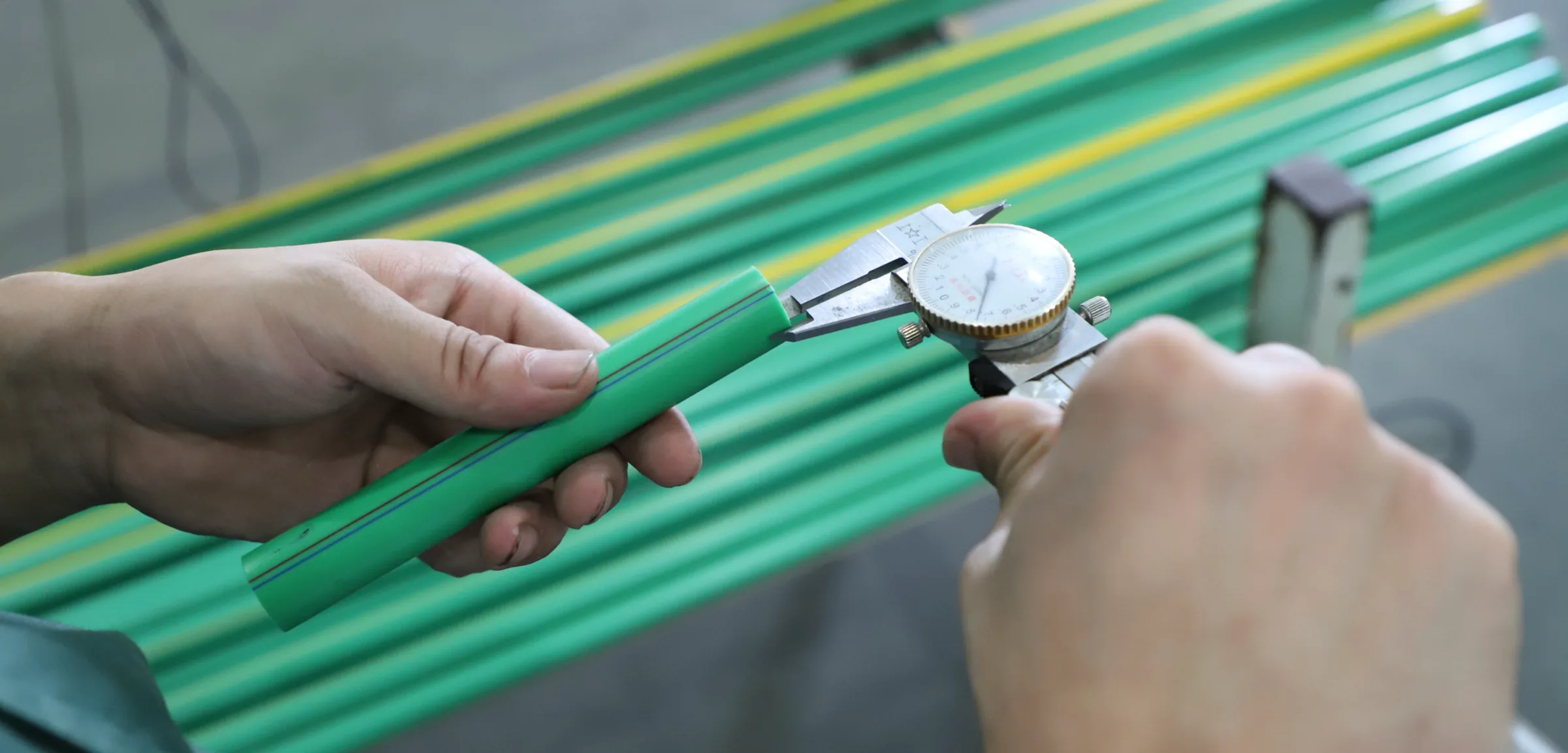
Made the call? Go straight to the range you need — or tell us the operating conditions and we’ll specify the material for you.
CPVC 806 — pressure-rated to 93°C (PPI TN-62), PN16, acid/alkali resistant, 50+ year design life (per our catalogue), with matched valves and solvent cement.
PPR — 70°C continuous (ISO 10508 Class 2), PN20, non-toxic, heat-fusion jointing, series 1103/1138 for hot & cold water and heating.
Still unsure which fits your project? Send us the operating temperature, medium and pressure — our technical team will specify the right material.
Temperature limits, pressure classes, jointing methods, corrosion, cost and service life — plus the when-to-specify rule and an MOQ & FOB quick-sheet for both material families. Compare at your desk.
For the engineer & consultant — CPVC is pressure-rated to 93°C (PPI TN-62); PPR is rated for 70°C continuous service (ISO 10508 Class 2), with 95°C permitted only as a 100-hour malfunction excursion. That gap is the deciding factor: above PPR’s range — high-temperature hot water, industrial process, fire lines — specify CPVC. Within it — standard hot/cold and heating — PPR is the cost-effective choice.
For the project buyer — neither is universally better — it depends on temperature and medium. CPVC wins for high temperatures (pressure-rated to 93°C, PPI TN-62), corrosive water, fire protection and industrial lines. PPR wins for standard hot/cold water, drinking water and underfloor heating within its range, at lower material cost. Match the material to the job.
For the contractor — CPVC is solvent-cemented (chemical bond with a dedicated CPVC adhesive — no power or welding tool), suiting high-temp and corrosive lines. PPR is heat-fused (socket welding with a fusion tool) for a homogeneous, leak-free joint ideal for potable and heating water. Both are supported in our 806 and PPR systems.
For the importer & distributor — per metre, PPR is generally the lower-cost material and CPVC the higher — but the right comparison is total fitness for the job. Paying for CPVC on a high-temp or corrosive line prevents failure; paying for CPVC on a standard water line is over-spec. Stock by your market’s dominant applications.
For the importer & brand owner — yes. IFANNova manufactures a full CPVC (806) system and a full PPR system in one 120,000 m² facility, serving 118+ countries, with low-MOQ private label. You specify by application and source both material families from one French-brand factory. MOQ, lead time and pricing: Coming soon — request with quantities and destination.
Send the operating temperature, medium, pressure and application, and we’ll tell you whether to specify CPVC (806) or PPR — with matched specs, certificates and pricing. Contact: sales03-ifan@ifangroup.com · WhatsApp / Tel +86 152 1588 7278 (full address: Coming soon).
Request a QuoteISO 15874-2:2013 has no colour clause: colour is not a PP-R grade.
Brass or plastic fittings?
At 45 °C a pipe loses pressure capacity, stiffness and surface integrity — three separate deratings governed by three different documents.