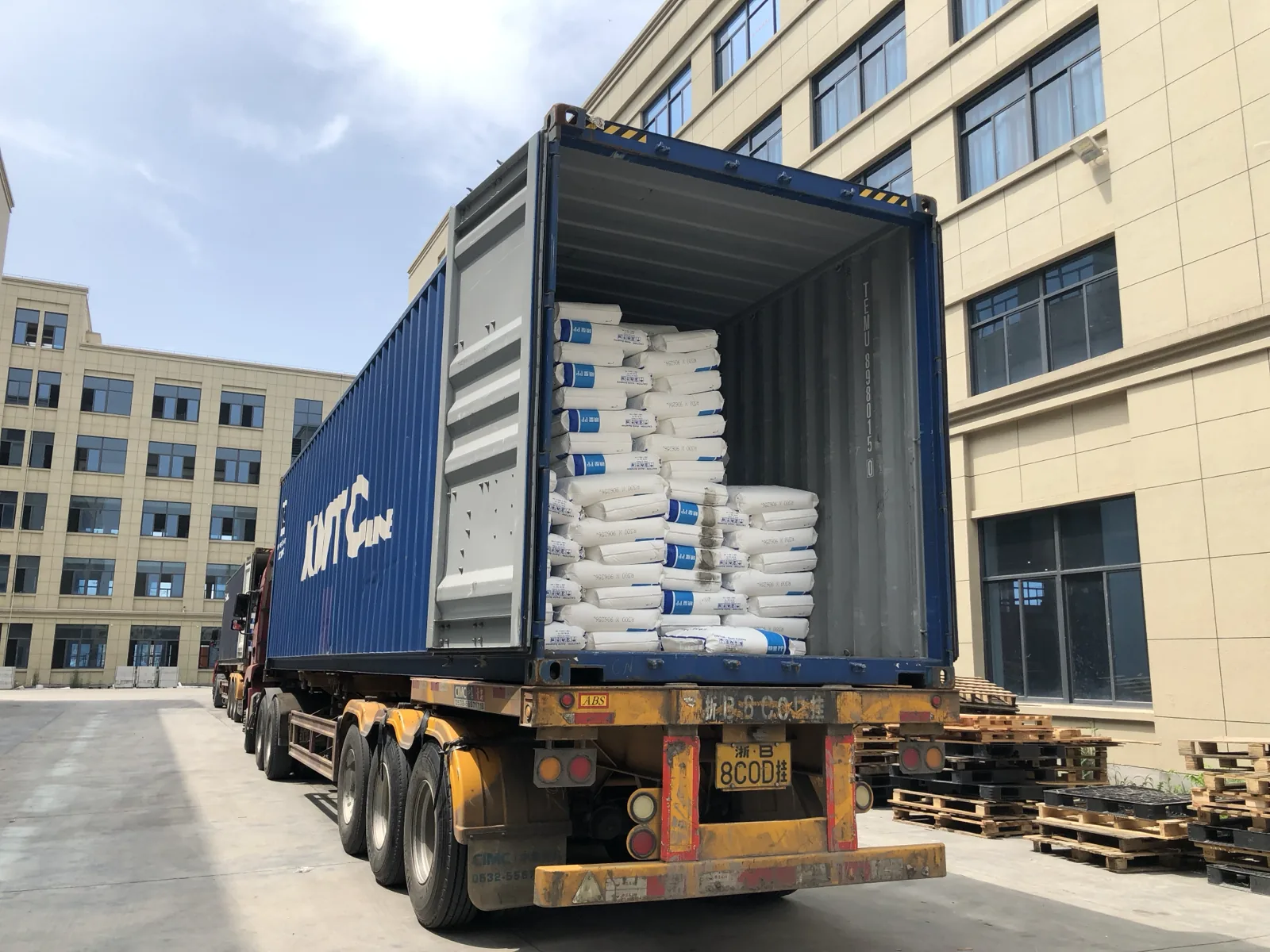
A container of PPR or HDPE stuck at port doesn’t just cost demurrage — it ties up your cash and leaves your customers waiting. Most hold-ups come down to four fixable things: the documents, the certifications, how the container is loaded, and a handful of avoidable mistakes. This guide walks a wholesaler through each — written by a factory that ships pipe to 118+ countries.
This is a general guide for importers of PPR, UPVC/CPVC, PVC and HDPE piping. It is not legal or customs advice — country-specific rules must be confirmed with your local authority or licensed customs broker.
Regardless of destination, most pipe shipments travel on the same core paperwork, satisfy the same kinds of certification, and get held up for the same handful of reasons. This guide breaks the import down into the four things you can actually control — and flags, honestly, everything that has to be verified with your customs broker.
Regardless of destination, most pipe shipments travel on the same core paperwork. Get this set right and consistent — every field matching across every document — and you remove the single biggest cause of customs delay. This is the general set; your destination may add or drop items, so treat it as a starting checklist to confirm with your broker.
| Document | What it is / why customs wants it | Watch-out |
|---|---|---|
| Commercial Invoice (CI) | Value, terms, buyer/seller, HS code — the basis for duty assessment. | Value & description must match the packing list and BL. |
| Packing List (PL) | What’s in the container: items, quantities, weights, dimensions. | Quantities/weights must reconcile with CI and BL. |
| Bill of Lading (BL) / Air Waybill | Title to the goods and the transport contract. | Consignee & description must match CI/PL exactly. |
| Certificate of Origin (CO) | Where the goods were manufactured — often needed for duty/preference. | Required in many markets; confirm form type per destination. |
| Product Certificates / Test Reports | Proof the pipe meets standards (SKZ, CE, WRAS, SGS, ISO). | Must cover the actual products shipped; keep current. |
| Insurance Certificate (CIF) | Cargo insurance evidence when the supplier insures to port. | Only under CIF-type terms — see the loading section below. |
| Pre-Shipment Inspection / Conformity Cert (country-specific) | Some destinations mandate inspection before shipping. | Coming soon / verify — rules vary by country and change. |
Which of these are mandatory, and what extra country-specific documents (pre-shipment inspection, conformity certificates, mandatory standard marks, specific HS-code duties) apply, differs by destination and changes over time. We flag these as verify with your customs broker rather than guess — a wrong assumption here is exactly what gets a container held.
Certifications do double duty in an import. At the border, conformity evidence and test reports help goods clear where the destination asks for them. On the jobsite, the project consultant checks that the pipe matches the tender’s standards. IFANNova pipe carries a European-standard portfolio built to serve both:
Because we manufacture and certify these ranges in our own facility and export to 118+ countries, the certificate set travels with the goods — you’re not chasing paperwork after the container has sailed.
Whether a specific mark (e.g. a national conformity certificate) is legally mandatory for your port is a country-specific question — confirm with your local authority or broker. Certificate numbers and exact scope are Coming soon (we state certification names, never invented numbers).
Getting the goods across the water cheaply and on schedule is its own skill. Three decisions do most of the work.
| Option | Best for | Note |
|---|---|---|
| Mixed container (PPR + HDPE + PVC + fittings) | First orders, test batches, mixed local demand | Optimises volume so you don’t ship air or over-commit to one product. |
| Full container per product | High-volume, fast-moving ranges | Simplest paperwork and handling per SKU. |
| Term | You handle | Supplier handles | Choose when |
|---|---|---|---|
| FOB | Ocean freight + insurance (your forwarder) | Goods loaded on board at origin | You have strong forwarder rates/relationships. |
| CIF | Take delivery at your port | Freight + insurance to your port | You’d rather the supplier arrange shipping. |
Lead time: Plan backwards from your project or selling season — production, loading, sailing and clearance all take time. Exact MOQ, production lead time, sailing time and trade terms are confirmed per quote — Coming soon.
We won’t quote a lead time or MOQ in an article — those depend on product, volume and season and are confirmed per quote. Incoterms responsibilities summarised here are general; confirm the exact term and version in your contract.
Almost every stuck shipment traces back to a small, preventable error. Here are the ones we see most, and the fix:
| Mistake | What happens | How to avoid it |
|---|---|---|
| HS code / description mismatch | Invoice, packing list and BL don’t agree — customs queries the entry. | Lock one consistent description & HS code across all docs; verify the HS code for your country. |
| Missing or expired certificates | The test report doesn’t cover the shipped product, or has lapsed. | Confirm certificates cover the exact products before loading. |
| No certificate of origin where required | Duty preference lost or entry delayed. | Ask your broker if a CO (and which form) is required for your route. |
| Standard marking mismatch | Pipe marking doesn’t match the tender or local rule. | Align markings (PN/DIN) with the bid and destination rule up front. |
| Skipped pre-shipment inspection | Destination mandates inspection you didn’t book. | Verify whether your country requires it — Coming soon per destination. |
The through-line: consistency across documents + verifying country-specific rules before you ship. A supplier that has documented exports to 118+ countries is a meaningful safeguard here — but the final country-specific check is always yours and your broker’s.
We don’t publish per-country applied duty rates: ZATCA gives rates only through its interactive per-code tariff search rather than a published table, so we could not obtain a citable applied rate for HS 3917. Standards and inspection rules are a different case — some are published and can be cited. Saudi Arabia’s SASO Technical Regulation 02-06-171 (Pipes Used in Water, Electricity and Gas Networks) sets the scope, binds labelling and conformity to the Saudi standards listed in its Annex (1), requires a certificate of conformity under ISO/IEC 17067 Type 3, and lists customs item 3917 in Annex 1(b). Rules still change and vary by port, so confirm the current text and your own entry with your customs broker.
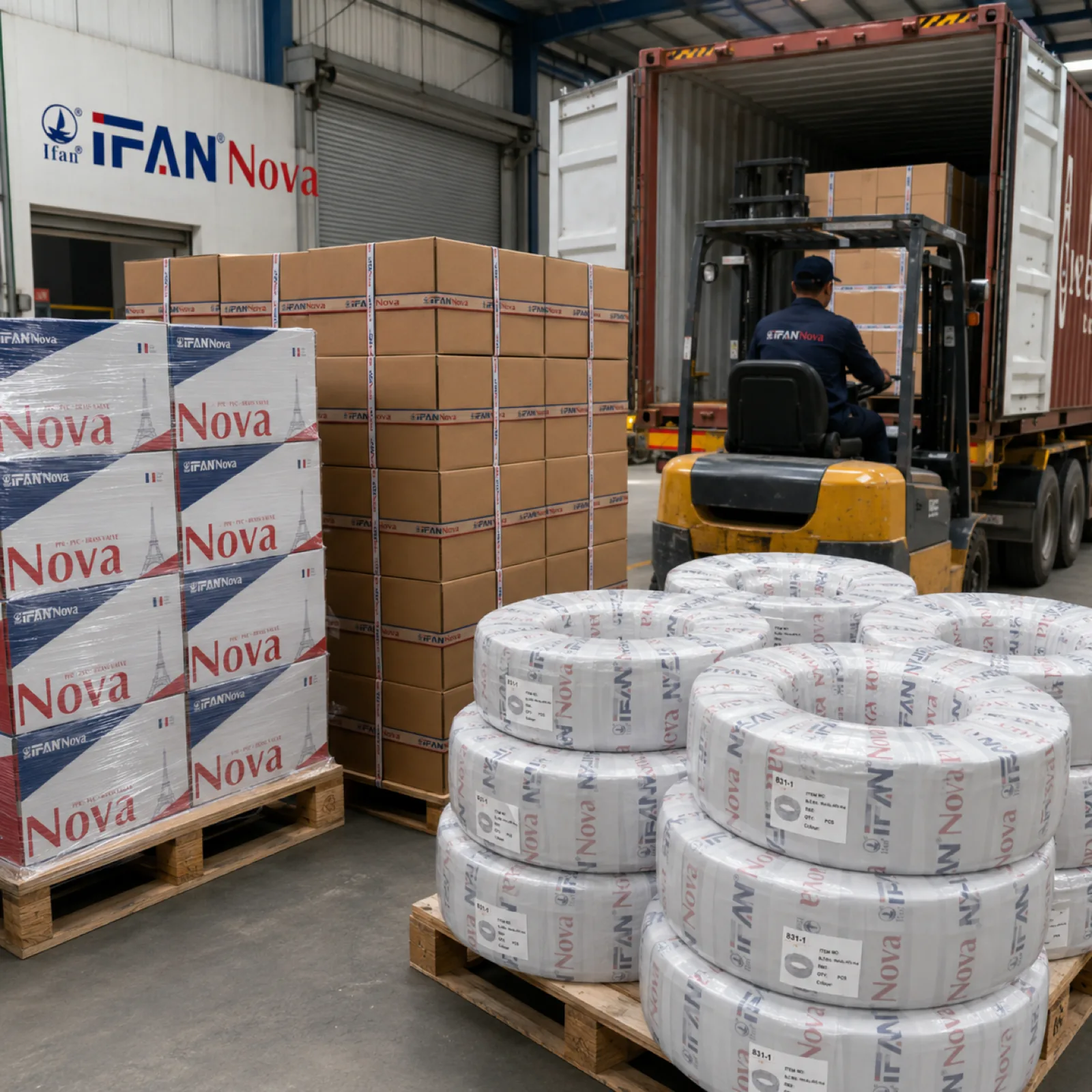
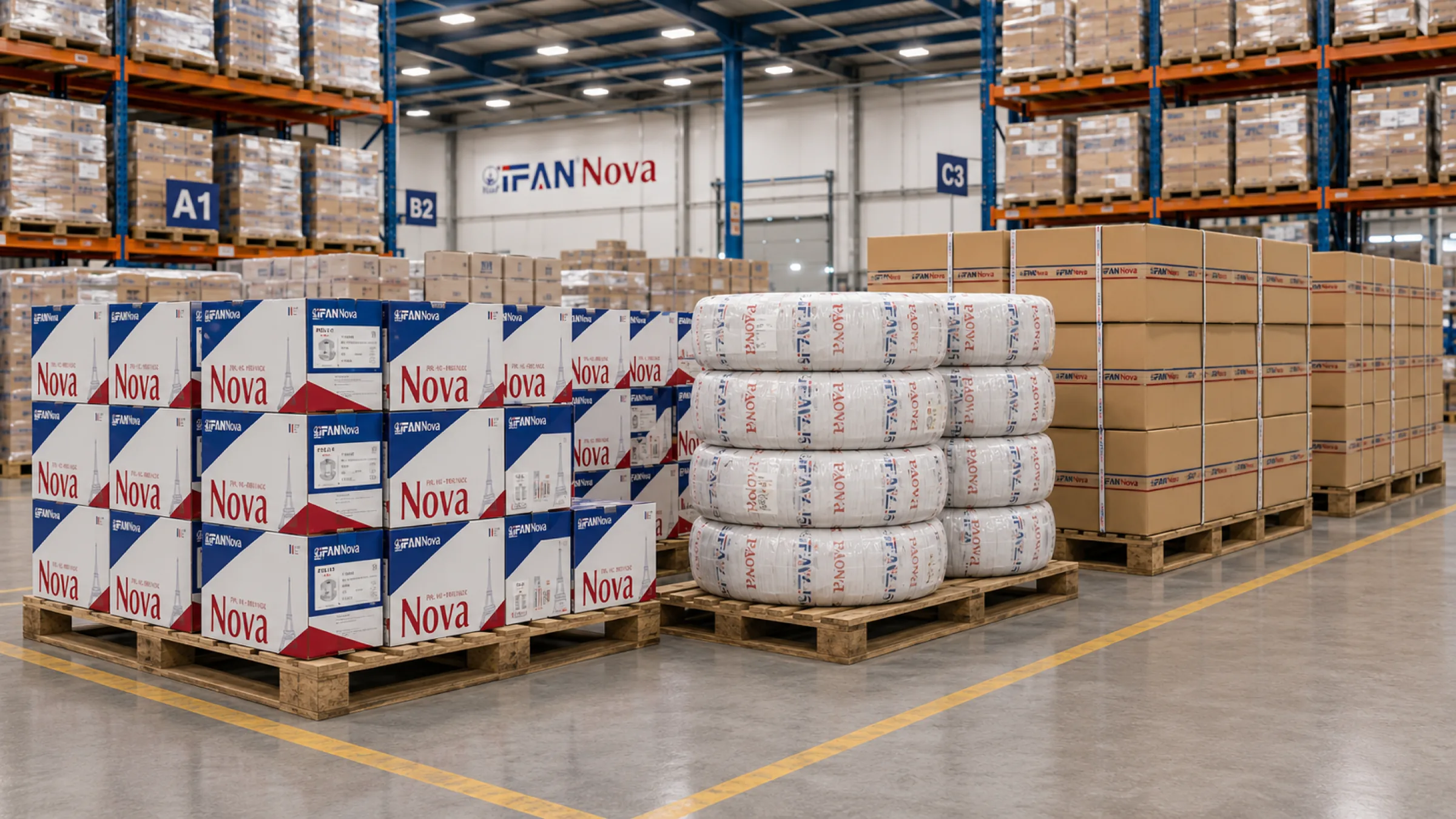
This guide is general on purpose — but your shipment isn’t. As a French brand manufacturing in our own facility and exporting to 118+ countries, IFANNova doesn’t just sell you pipe; we prepare the export documentation set with you, provide the European-standard certificates your customs and project inspectors ask for, and plan the container so it lands efficiently.
Download the Import Documents Checklist + FOB/CIF Quick-Reference (PDF) — a printable version of the checklist above, plus a mixed-vs-full-container decision table and a plain-language reminder to verify country-specific rules with your broker. Then talk to a supplier that documents exports to 118+ countries.
PN20 potable, hot & cold — SKZ / WRAS / CE / DVGW certified for projects and conformity evidence.
PN16, marked DIN 8077/8078 (per our catalogue) — water supply and pressure lines that match the tender spec.
PN16, 95–120°C (CPVC grade, per our catalogue) rated pressure and PVC drainage — mix into one container with PPR & HDPE.
For the importing wholesaler & first-time importer — the universal set is a commercial invoice, packing list, bill of lading, certificate of origin, and product certificates/test reports (SKZ / CE / WRAS / SGS). Country-specific additions — pre-shipment inspection, conformity certificates, mandatory marks, HS-code duties — vary by destination and change, so verify with your customs broker. We prepare the export set with you.
For the importing wholesaler & project buyer — IFANNova pipe carries German SKZ, CE, WRAS, DVGW, SGS and ISO — helping goods clear where conformity evidence is asked for, and satisfying consultants who check against PPR PN20, HDPE PN16 marked DIN 8077/8078 (per our catalogue), UPVC/CPVC PN16. Whether a specific mark is legally mandatory for your port — verify locally.
For the importing wholesaler & first-time importer — yes. For first orders or mixed local demand, a mixed container across product types optimises volume; a full container per product suits high-volume ranges. It keeps you from shipping air or over-committing to one SKU. Exact volumes and MOQ are confirmed per quote — Coming soon.
For the importing wholesaler — FOB puts freight and insurance in your forwarder’s hands (best if you have strong shipping rates); CIF lets the supplier arrange shipping and insurance to your port (simpler if you’d rather not). The right term depends on your forwarder relationships and destination — confirm the exact Incoterm in your contract.
For the importing wholesaler & first-time importer — usually a mismatch across documents — HS code or description differing between invoice, packing list and BL — or a missing/expired certificate or certificate of origin. Consistency across paperwork plus verifying country-specific rules before shipping prevents most demurrage. A supplier exporting to 118+ countries helps you get it right.
For the importing wholesaler & first-time importer — these depend on product, volume and season, so we confirm them per quote — Coming soon, never as a blog number. What we can say: we manufacture in our own facility (30+ years, 120,000 m²) and export to 118+ countries, so production and documentation are handled together.
Tell us products, quantity and destination market — we reply with certification coverage, the export document set, a mixed-container plan and pricing. Contact: sales03-ifan@ifangroup.com · WhatsApp / Tel +86 152 1588 7278 (full address: Coming soon).
Written from the supplier side, including what to do when a supplier tells you a certificate number is coming soon — which is what we currently have to say…
The certification route as the official sources describe it, with the responsibility split written out — and an honest list of the numbers everyone quotes…
Two schemes that are routinely confused, one of which involves a factory audit.