The certification route as the official sources describe it, with the responsibility split written out — and an honest list of the numbers everyone quotes that we could not ground.
Most compliance pages for the Saudi market tell you which certificates exist. That is the easy half. The half that costs importers money is the sequencing — which party must act first, what state the file has to be in before the next party can move, and which steps repeat on every container instead of once per product.
This page covers that sequence, for Saudi Arabia only. The wider GCC picture — the SASO Technical Regulation for Building Materials Part 5 that governs pipes, the customs coding annex, the UAE ECAS and MOIAT route — is on our Middle East market page and is not repeated here.
One thing is repeated, because it determines whether the rest of this page is relevant to you at all: our pressure pipe range tops out at Φ110 mm, and our PP-R pipe is produced only in 20, 25 and 32 mm (per our catalogue). We cannot supply DN150–DN400 mains. If your Saudi project is a district cooling header or a trunk main, no amount of SABER process knowledge from us will help you. If your scope is building-services distribution, branch work and fittings, read on.
SABER is described by its regulator as “a part of the digital systems under the Product Safety Initiative. It enables beneficiaries, including commercial establishments, government entities, and individuals, to register their establishments and consumer products, whether imported or locally manufactured, to obtain the required certifications” (SASO, Products Tracking).
Two structural facts explain why requests get stuck and who you escalate to. The platform operates under the supervision of SASO — the Saudi Standards, Metrology and Quality Organization — while technical operation is handled by Reach and development by Thiqah (SABER, About SABER). SASO is the regulator; the platform operator is not.
The platform’s home page lists four beneficiary categories: importers, local factories and manufacturers, individuals, and government entities (SABER, saber.sa). SASO describes “beneficiaries, including commercial establishments, government entities, and individuals,” with certificates registered by a Conformity Assessment Body (SASO, Products Tracking).
Notice what is not on that list: the foreign exporter. We are not a SABER beneficiary. We cannot open a SABER account against a Saudi shipment, and any supplier who says they will “handle SABER for you” is either describing work done through your account or describing something that does not exist. This is the most consequential structural fact on this page, and everything in the responsibility table below follows from it.
SASO lists five services on the platform; the four below are the ones that bear on pipe, the fifth covering used-vehicle imports by individuals. The distinction is not cosmetic — it is the difference between a one-time task and a per-container task.
| Service | Official description | Frequency |
|---|---|---|
| Product Registration | Establishments “add their products to the platform and save them permanently” (SASO, Products Tracking) | Once per product, persistent |
| Product Certificate of Conformity (PCoC / CoC) | For “products subject to technical regulations, whether imported or locally manufactured” (SASO, Products Tracking) | Per product; validity not published — see caution below |
| Shipment Certificate (SCoC) | “Issued to clear the product from the country of shipment and is required for each incoming shipment” (SASO, Products Tracking) | Every consignment, without exception |
| Self-Declaration | “A commitment from the establishment that the product is not subject to technical regulations” (SASO, Products Tracking) | For non-regulated products |
The Shipment Certificate line is where repeat-order programmes go wrong. It is required for each incoming shipment (SASO, Products Tracking). A buyer who cleared a first container smoothly often assumes certification is “done” and plans the second on a shorter timeline. The product-level certificate may persist; the shipment-level certificate restarts at zero every time the goods sail. SASO’s own definitions draw the same line: a Certificate of Conformity for Model Approval covers model approval, while one for Consignment covers “a quantity of the product prepared (to export/import)”, with consignments distinguished by serial number, batch number or date of production (SASO, Certificates of Conformity).
That last clause has a direct effect on what we print. If your consignment certificate is tied to batch numbers or production dates, our batch marking has to match what the certificate says. Our HDPE pipe is marked “GERMANY STANDARD DIN8077/8078” (per our catalogue) — a transcription of the print legend, not a claim of conformity, since DIN 8077/8078 are PP standards while PE corresponds to DIN 8074/8075. Custom print legends and batch coding formats are Coming soon as a published specification; today they are agreed case by case, so raise them at quotation rather than after the CoC is issued.
The order is fixed by the platform. SABER’s guide states that when you open a shipment request, “All regulated products that have a valid COC will be displayed, in addition to the non-regulated products that have an imported self-declaration to apply for shipment certificate request” (SABER Training Guide for Shipment Certificate).
Read that as a systems constraint, not a rule of thumb: if the regulated product does not already carry a valid CoC, it will not appear in the shipment certificate screen at all. You cannot start the shipment step early, and you cannot run the two in parallel. The chain is:
Underneath sits a blanket obligation: importers “are obligated to register all the consumer products on Saber E-platform and apply the requirements for the products within the scope of applied technical regulations, or to submit a self-declaration for products that are not covered by regulations” (SASO news release, saso_news_1178). “All products” means non-regulated items in your packing list still need a platform action — the self-declaration — not silence.
SABER’s training guide sets out the CoC flow. The sequence matters more than any individual screen, because of where payment falls in it:
Then the guide is explicit about what happens next: “Once the application has been accepted by the conformity assessment body, the user will be able to create and pay the invoice to start reviewing the document by the conformity assessment body and take the conformity decision” (SABER Training Guide for Certificates of Conformity).
Unpack that ordering, because it is counter-intuitive and it is a scheduling risk. The CAB accepts the request first. Only then can the importer generate and pay the invoice. Only after payment does the CAB review documents and reach a decision. There are two separate queues here — acceptance and review — with a payment action wedged between them that depends on someone on your side noticing that acceptance has happened.
The practical consequence: the exporter’s technical file must be complete before the request is sent, not supplied reactively once the CAB starts reviewing. By the time review starts you have already paid, and a document gap becomes a re-work loop on a paid file rather than a free correction on an unsent one.
The CAB is not a rubber stamp. SASO accepts conformity assessment bodies to ensure “the efficiency and reliability of processes verifying product compliance with technical regulations and approved standards,” and publishes its lists of accepted bodies under separate activity headings including product certification, inspection and testing, and calibration (SASO, Acceptance of Conformity Assessment Bodies).
This is the table to put in front of your forwarder and your supplier at the same time. It is built from the platform’s own beneficiary categories and the step sequence above, not from custom.
| Step | Who acts | Precondition from the other party |
|---|---|---|
| Fasah registration (ZATCA, Customs Journey) | Importer | Nothing from supplier |
| SABER facility registration | Importer (a listed beneficiary) | Nothing from supplier |
| Product registration (SASO, Products Tracking) | Importer | Supplier product data, model list, specifications |
| Determining regulated status | Importer, via the platform | Supplier classification input — see caution below |
| Selecting the CAB and sending the request | Importer | CAB chosen from platform options |
| Supplying the technical file | Supplier (us) | Must be complete before request submission |
| Paying the CAB invoice | Importer, after CAB acceptance | Depends on importer monitoring status change |
| Conformity decision | CAB | Paid invoice plus complete documents |
| Shipment certificate, per consignment | Importer | Valid CoC must already exist |
| Customs declaration | Broker (“supplier or their representative”) | Shipment certificate available for electronic validation |
The last row needs a note, because the terminology inverts. ZATCA states that “any goods entering or leaving the Kingdom must be declared through a Customs Declaration. This declaration is completed electronically by the supplier or their representative” (ZATCA, Guideline on Imports and Exports under VAT Provisions, §4.2). Here “supplier” means the party making the declaration — in practice your broker — not the foreign manufacturer. Do not let this wording migrate into your contract as an obligation on the mill.
The two systems have been wired together for years. SASO “activated linking ‘Saber’ and ‘Fasah’ platforms on 01/07/2020 to accelerate the customs clearance procedures through electronic validation of the issued consignment conformity certificate when issuing the customs declaration via ‘Fasah’ platform powered by Saudi Customs” (SASO news release, saso_news_1178).
The operative phrase is electronic validation of the issued consignment conformity certificate. Your shipment certificate is not paper someone eyeballs at a counter; it is a record the declaration checks against. A PDF in an inbox that was never properly issued in the platform is, for this purpose, not a certificate.
Fasah registration is step one of ZATCA’s published customs journey: “Registration of New Importer or Exporter”, running “Access the service” → “Log in to the FASAH platform” → “Fill in the fields” → “Activate the account”, requiring only a Commercial Registration Number and an ID number (ZATCA, Customs Journey). A light step, on the importer — and frequently left until the goods are already moving, which is how a two-field registration ends up on the critical path.
ZATCA requires information on the nature of the goods “such as tariff code, country of origin, and description of the goods” plus the value in SAR, from which the authority automatically calculates customs duty, excise tax and VAT. The importer must disclose their Tax Identification Number, and “the person importing into the Kingdom must be licensed to carry out an import into the Kingdom of Saudi Arabia” (ZATCA, Guideline on Imports and Exports under VAT Provisions, §4.2).
Confirm that licensing point early with a new Saudi counterparty. It is a condition on the importing entity, not on the goods, and no amount of correct paperwork on our side substitutes for it.
You will find plenty of pages listing “commercial invoice, bill of lading, certificate of origin, packing list” as the definitive Saudi import document set. We are not reproducing that as authoritative, and here is why.
ZATCA’s former Import Instructions page is dead — tested directly, it returns HTTP 200 but redirects to ZATCA’s PageNotFound page. The document-list wording circulating in search summaries could not be re-verified on any ZATCA page we could open. The VAT guideline, which we could open, specifies the elements of the declaration but publishes no document checklist.
So treat the declaration elements above as sourced, and the document checklist as something to confirm against current Fasah requirements with your broker. We searched official sources and found no citable, currently-published list. A checklist you trust that turns out to be stale is worse than no checklist at all.
ZATCA is unambiguous on VAT: “VAT at 15% is imposed on all goods imported into the Kingdom, regardless of the classification of such goods, the customs duty rate applicable to them, or in cases where goods are exempt from customs duties” (ZATCA, Guideline on Imports and Exports under VAT Provisions, §4.1). It is payable at clearance together with customs duty and other charges (§4.2).
Note what that 15% is: value added tax, not a tariff. It applies regardless of classification, which is why it is the one landed-cost number on this page we will state.
Customs duty on pipes is a different matter, and we will not give you a figure. Duty rates vary by tariff code and are calculated automatically from the declared classification. The rate for your specific pipe classification must be looked up in ZATCA’s tariff tool, which is interactive and which we could not query. Any percentage we published would be a guess dressed as research. Have your broker run the classification and give you the rate in writing before you price the job.
There is a genuine 2025 change here, narrower than versions circulating in trade blogs. ZATCA “has announced the mandatory advance submission of the manifest and customs declarations for goods arriving through sea ports, effective from 29 October 2025” (ZATCA news, Mandatory Advance Submission of Customs Declarations). The stated purpose is to enable pre-clearance and speed up processing after arrival.
What the announcement itself does not state is a deadline in hours. It does point to a further document: ZATCA “has issued the Rules for Submitting Advance Cargo Information (ACI) at Seaports, which provide a detailed explanation of the submission process and the steps importers must follow” (same announcement). We could not open that rules document on ZATCA’s site, so we cannot quote it. What we can say is that the widely repeated “48 hours before arrival” figure appears on forwarder and consultancy pages but nowhere in ZATCA’s announcement, and that carrier advisories describe a tiered rule — longer for distant ports, shorter for nearby ones — rather than a single 48-hour cut-off. We flag this because the 48-hour number is repeated so confidently that it has the texture of a fact. If your planning depends on a cut-off, get it from your carrier or broker against the current ACI rules.
The same applies to the frequently quoted “PCoC is valid for one year”, which we could not verify for pipes or for products generally. The only official “ONE Gregorian year” clause we located states “The validity of the certificate is ONE Gregorian year, starts in date of issue” (SASO/JEEM, IECEE Technical Regulation, Article 6/5) — and that regulation governs electrical equipment, which pipes are not. SABER’s CoC guide and SASO’s certificates page publish no general validity period. Plan re-certification on what your CAB tells you in writing for your product, not a number borrowed from another regulation.
At the regulation level the answer is known: the SASO Technical Regulation for Building Materials Part 5 covers pipes used in hot, cold and sewage water, electricity and gas connections in buildings, including fittings and accessories, and excludes firefighting lines. We set that out with the article references on our Middle East page rather than restate it here.
What that does not settle is how your specific item is classified on the platform, which is the question that actually decides whether you file a CoC or a self-declaration. Annex (1-b) of the same regulation carries an explicit note that the products and customs codes shown in SABER are the authoritative reference — so the classification argument is settled inside your account, not against a PDF.
The reliable method is built into the process anyway: once your product is registered and classified, selecting a certificate type means “only the products require the certificate of conformity will be displayed to choose from” (SABER Training Guide for Certificates of Conformity). Let the platform answer the regulated/non-regulated question against your actual classification — that query is account-bound, so nobody can pre-answer it in a blog post.
What we can tell you is which products go into that query (all per our catalogue): PP-R PN20 series 1103 pipe in 20/25/32 mm with 75 fittings in series 1138; UPVC 806 PN16 pressure pipe Φ20–110 with 203 fittings in series 1806; HDPE PN16 pipe Φ20–110 with 603/604 weld-free compression fittings; PVC 902 drainage pipe Φ32–110 with 1902 fittings Φ32–160, which is non-pressure drainage only and whose Φ160 is a fitting size, not a pipe size and not a pressure size; PEX series 2114 insert-and-sleeve fittings in S16/S20 and series 2121 press fittings in 16–32 mm; and brass 2405 in 1/4″–1″.
One route publishes a concrete processing time and applies to a buyer category that often does not realise it qualifies. SASO’s e-service for shipment conformity certificates for non-commercial products — covering importers supplying government entities, scientific and innovation imports, individuals importing construction materials, and industrial raw materials and production lines — states a processing time of “Two Working Days”, and notes that “To facilitate the procedures for importing shipments through land ports, the purchase invoice is sufficient” (SASO e-services, service ID 405). For the industrial category the requirements listed are an industrial licence, an exemption certificate, the purchase invoice and customs documents. Fees there vary by product type and reference an attachment we could not open, so we quote no figure. If your Saudi entity imports pipe as an industrial input rather than for resale, ask your CAB whether this route is open to you.
The regulation that governs pipes is the SASO Technical Regulation for Building Materials Part 5, and its Article 9/2 grounds for non-conformity — improper fixing of conformity labels or the Saudi Quality Mark, failure to issue or improper issuance of the Certificate of Conformity or Supplier’s Declaration of Conformity, incomplete technical documents, and incomplete product data, labels or usage instructions — are set out clause by clause, along with the Article 9/3 power to order withdrawal, re-export or destruction at the violating party’s expense, on our Middle East page. We are not repeating them here.
What is worth adding on this page is the commercial reading of those grounds, because it changes how you think about Incoterms and who carries the tail risk: a physically perfect pipe can be a non-conforming product. Nothing in the Article 9/2 list requires the goods to underperform. An incomplete technical file, a certificate issued improperly, a label fixed badly — each is sufficient alone. Product performance is not the safety net people assume it is, and which party pays for a withdrawal or a re-export is settled by your Incoterm long before anyone inspects the pipe.
On the size of that exposure we have no number for you. We searched official sources but found no citable basis for a fine, a fee or a deadline attached to these measures — please confirm with your customs broker or your conformity assessment body.
This is why the sequencing point matters commercially. Maximum leverage over your compliance outcome sits before the request is submitted, while the file is being assembled and nobody has paid. That is a purchasing conversation, not a logistics one, and it happens at quotation.
Better to set this out plainly than let it surface during a CAB review.
| File element | Status |
|---|---|
| Product specifications, dimensions, pressure class, model lists | Available (per our catalogue) |
| Certification portfolio — SKZ, CE, WRAS, DVGW, SGS, TSE, GOST-R, ISO 9001, ISO 14001 and others | Held (per our catalogue) |
| Certificate numbers, validity dates, scope wording for the above | Coming soon — we will not paraphrase a scope we have not published |
| Whether any of the above European approvals are recognised as a compliance route in Saudi Arabia | Not established. We searched for a SASO, GSO or GCC primary source addressing recognition of foreign potable-water or product approvals and found none. Do not assume a European certificate shortens the SABER path — confirm with your CAB |
| Custom print legends and batch coding formats | Coming soon as a published spec; agreed case by case today |
| SABER account actions on your behalf | Not possible — the foreign exporter is not a platform beneficiary category |
| Prices, MOQ, lead times, freight, duty rates | Coming soon / confirmed at enquiry — we do not publish these |
| DN150–DN400 pressure pipe | Cannot supply. Pressure range ends at Φ110; PP-R ends at 32 mm |
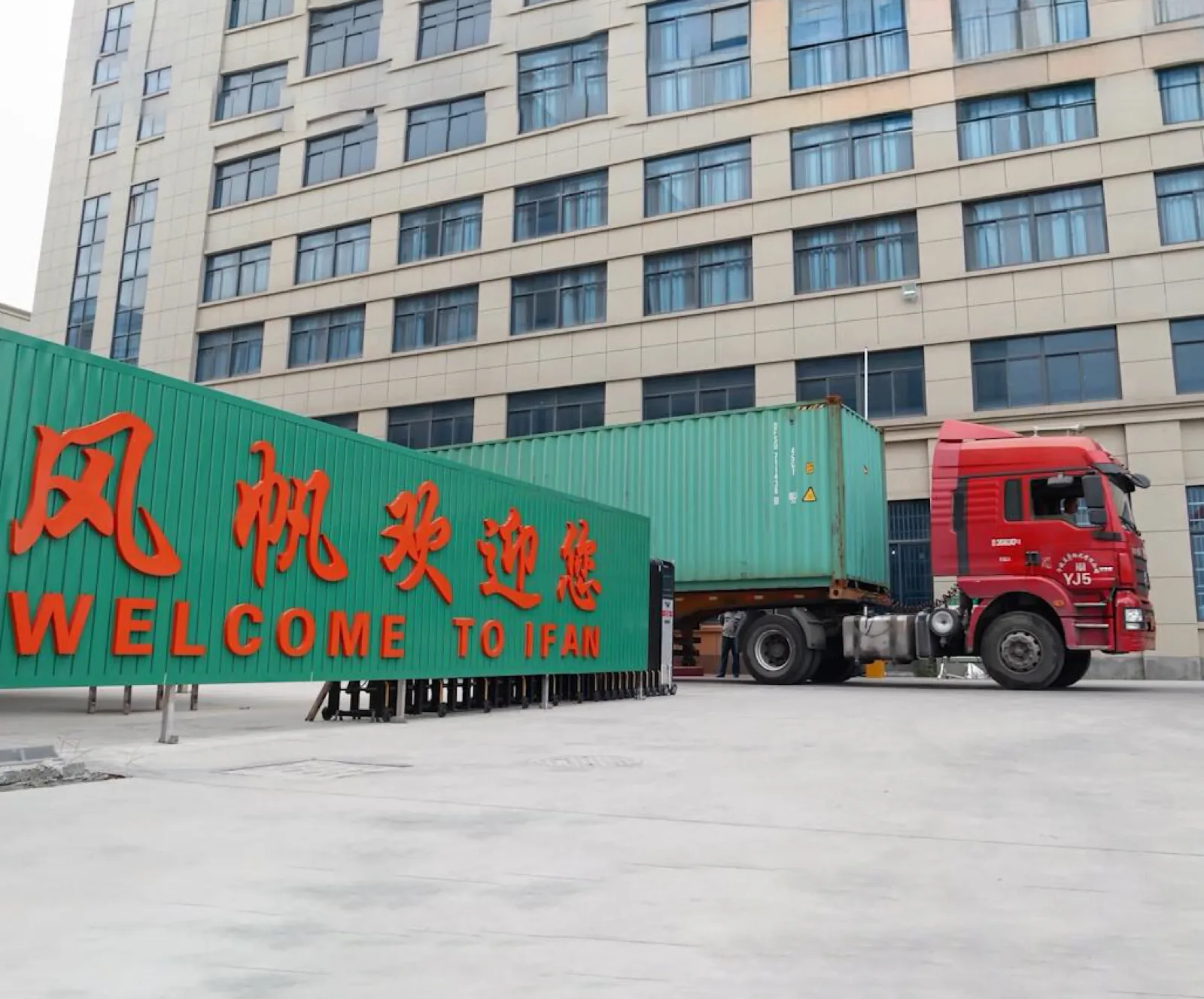
A word on origin, since it comes up in every certificate-of-origin conversation. IFANNova is a French brand; the pipe is manufactured by Zhuji Fengfan Piping in Zhejiang, China (per our catalogue). It is not made in France, and we say so before you ask, because an origin statement that surprises anyone at declaration stage is a problem for both of us. Behind the brand: 30+ years, 1000+ employees, 118+ countries, 10,000 sets of moulds, 120,000 m² of plant, 24-hour online response (per our catalogue).
Can you open the SABER file for us? No. The beneficiary categories are importers, local factories, individuals and government entities; a foreign exporter is not among them. What we supply is the complete technical file that goes into your request, before you submit.
We cleared one container fine. Do we need to do this again? Product registration persists. The shipment certificate does not — it “is required for each incoming shipment” (SASO, Products Tracking). Build that into every repeat order.
Our consultant quoted a SABER fee. Is it right? Two of the platform fees are published. The SABER FAQ states the cost to register a product certificate of conformity as SAR 500, and to issue a shipment certificate as SAR 350, both excluding VAT (saber.sa, FAQ — "What are the costs on the SABER platform?"). Those are platform charges only. What your conformity assessment body charges to study the file and take the conformity decision is a separate invoice, and no general official price list for CAB assessment fees was located — get that in writing from the CAB you select.
Can you supply DN200 for the main run? No. Our pressure pipe stops at Φ110 and PP-R at 32 mm (per our catalogue). The Φ160 in our range is a 1902 non-pressure drainage fitting, not a pipe, and cannot be substituted into a pressure line. We would rather lose the enquiry than have that found at pressure test.
The cheapest moment to fix a Saudi compliance problem is before the CoC request is sent, while nothing has been paid and no CAB clock is running. Send us your reference list, the classification your broker proposes, and the certificate types your CAB says you need. We will tell you what we can supply, what we cannot, and which documents we can put in the file today versus which remain Coming soon.
We will not guess at a duty rate, a certificate validity or a fee to win the enquiry. Contact us with your project scope and we will come back with what is actually confirmable.
Two schemes that are routinely confused, one of which involves a factory audit.
Four certification schemes, four different legal bases, and one regulatory gap nobody in the trade talks about openly.
Classification logic you can apply to your own product, plus a straight explanation of why the duty rate is the one number we will not print.