The IFANNova catalogue lists PPR PN20 pipe at 20 × 2.8, 25 × 3.5 and 32 × 4.4 mm in 4 m lengths. These are catalogue entries, not a universal PP-R rule or a factory capability ceiling. Define the selected product and each print, packaging, colour or geometry change before requesting an own-brand quotation.
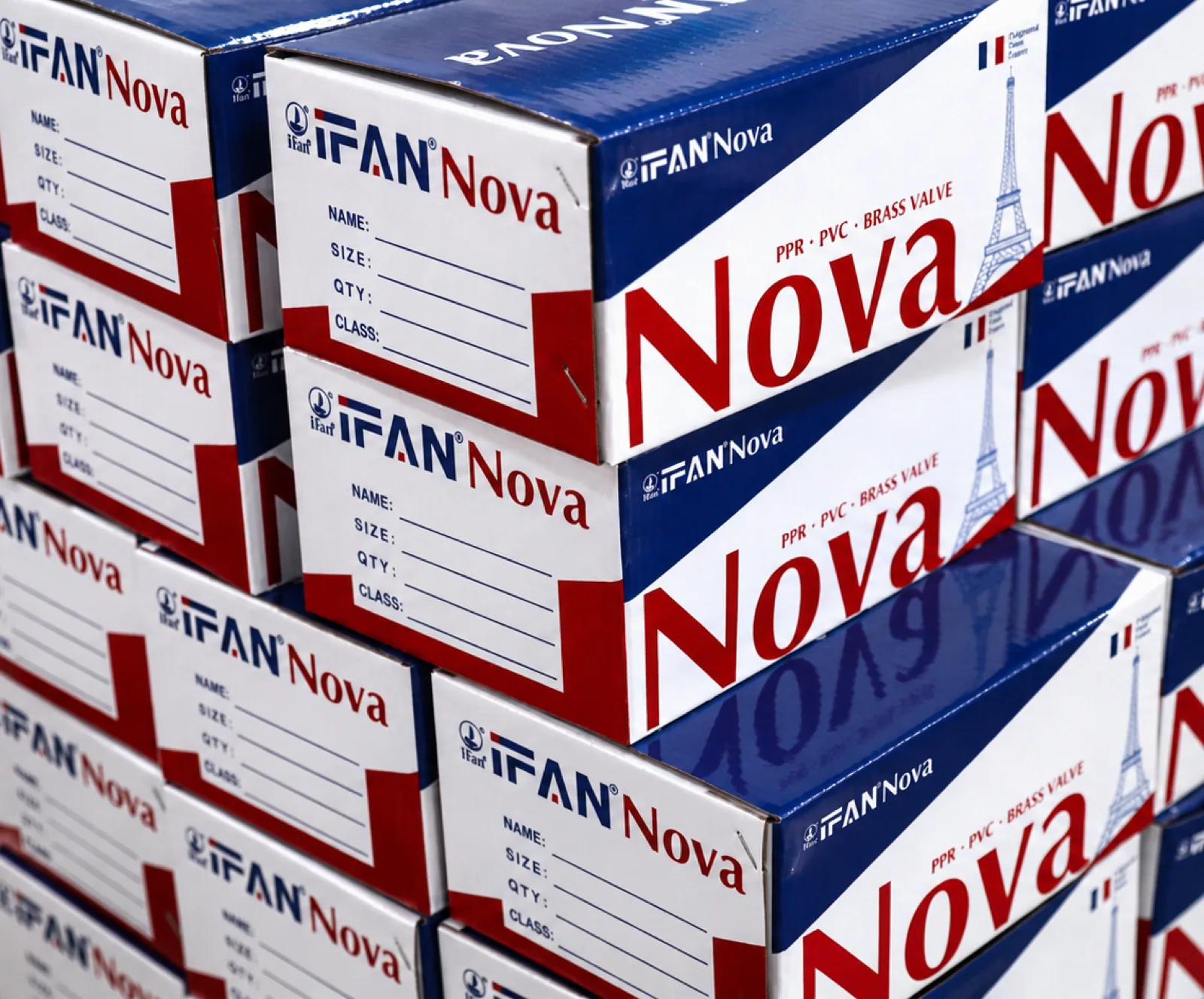
Private-label pipe carries a buyer’s brand on a specified product or its packaging. The branding agreement must identify the underlying product, permitted changes and evidence for the intended market. An OEM or ODM label alone does not settle the design, tool rights or what you may move to another supplier.
This guide is about the mechanics: printing, packaging, colour, moulds and minimums — which of those you get to define, which the factory defines and simply lets you use, and which ones are commercial negotiations that no honest supplier can put a number against before seeing your volumes.
IFANNova presents itself as a French brand. Its catalogue names Zhuji Fengfan Piping Co., Ltd as manufacturer; the contact page locates the operation in Zhuji, Zhejiang, China. Brand nationality does not establish the origin of every supplied item. Request origin evidence for your actual order alongside the commercial quotation.
In sourcing, OEM means Original Equipment Manufacturer or Manufacturing; ODM means Original Design Manufacturer or Manufacturing. A useful distinction is buyer-specified design versus a manufacturer-developed catalogue design adapted for the buyer’s brand. Confirm how the supplier uses these labels, then specify the actual arrangement in the contract.
OEM work can involve manufacturing to the buyer’s specification; ODM work can involve selecting or modifying an existing manufacturer design. The Komaspec sourcing explanation describes this distinction. It is explanatory manufacturer evidence, not a statement of IFANNova’s design rights or commercial terms.
No OEM or ODM label by itself confirms design rights, exclusivity, tooling ownership or a transfer right. Ask the supplier to name the proposed arrangement in the quotation and put each permission and restriction into the written agreement.
For buyer-specified design, confirm access to the agreed drawings and manufacturing files. For catalogue design, confirm which modifications and branding are permitted. In either case, ask whether the design may be supplied to other buyers and which rights survive termination. Keep those answers with the quotation rather than inferring exclusivity from an acronym.
For an existing PPR fitting, distinguish your artwork from the existing geometry and tool. Confirm ownership and permission for each element. Do not assume that changing a logo transfers the underlying design or gives territorial exclusivity.
Packaging, pipe-wall print, plastic colour and product geometry are four categories of decisions, not a universal cost or lock-in ladder. An existing tool may support a geometry change; print or packaging can still carry setup charges and file restrictions. Compare the actual proposed process and permissions for each change before accepting its minimum or price.
| Layer | What it is | Who defines it | Reversibility if you change supplier | Product mould and setup basis |
|---|---|---|---|---|
| 1. Packaging | Cartons, shrink film, bundle labels, hang tags, spec labels | Confirm artwork ownership and permitted use | Confirm file access and reuse rights | Product mould not assumed; confirm packaging setup |
| 2. Pipe-wall printing | Brand name, size, class and text printed continuously along the pipe | You propose text; factory confirms process and permitted marks | Confirm print-file access and authorised marks | Product mould not assumed; confirm print setup |
| 3. Colour | Body colour of pipe and fittings via masterbatch | Negotiated — you specify, factory confirms feasibility | Agree colour reference and acceptance tolerance | Confirm existing compound and any process/tool changes |
| 4. Geometry / moulds | Fitting shape, socket form, dimensions, any dedicated tool | Confirm design authority and tool ownership separately | Confirm tool and design transfer rights | Existing tool, insert or new tool: confirm proposed method |
If catalogue geometry is acceptable, identify the existing item and request only the selected branding layers. If dimensions or shape must change, request a drawing review and proposed tool method first. For print or packaging, confirm proof and file rights; for colour, confirm compound and physical approval. Accept resolved items, clarify missing conditions, and hold changes with unresolved evidence or sample acceptance.
Begin with the branding changes your market actually needs. Packaging, print, colour and geometry create different setup and ownership questions. Request the cost, minimum basis, approved proof and reuse permissions for each selected layer; the ordering of the table is a planning aid, not a guaranteed cost ranking.
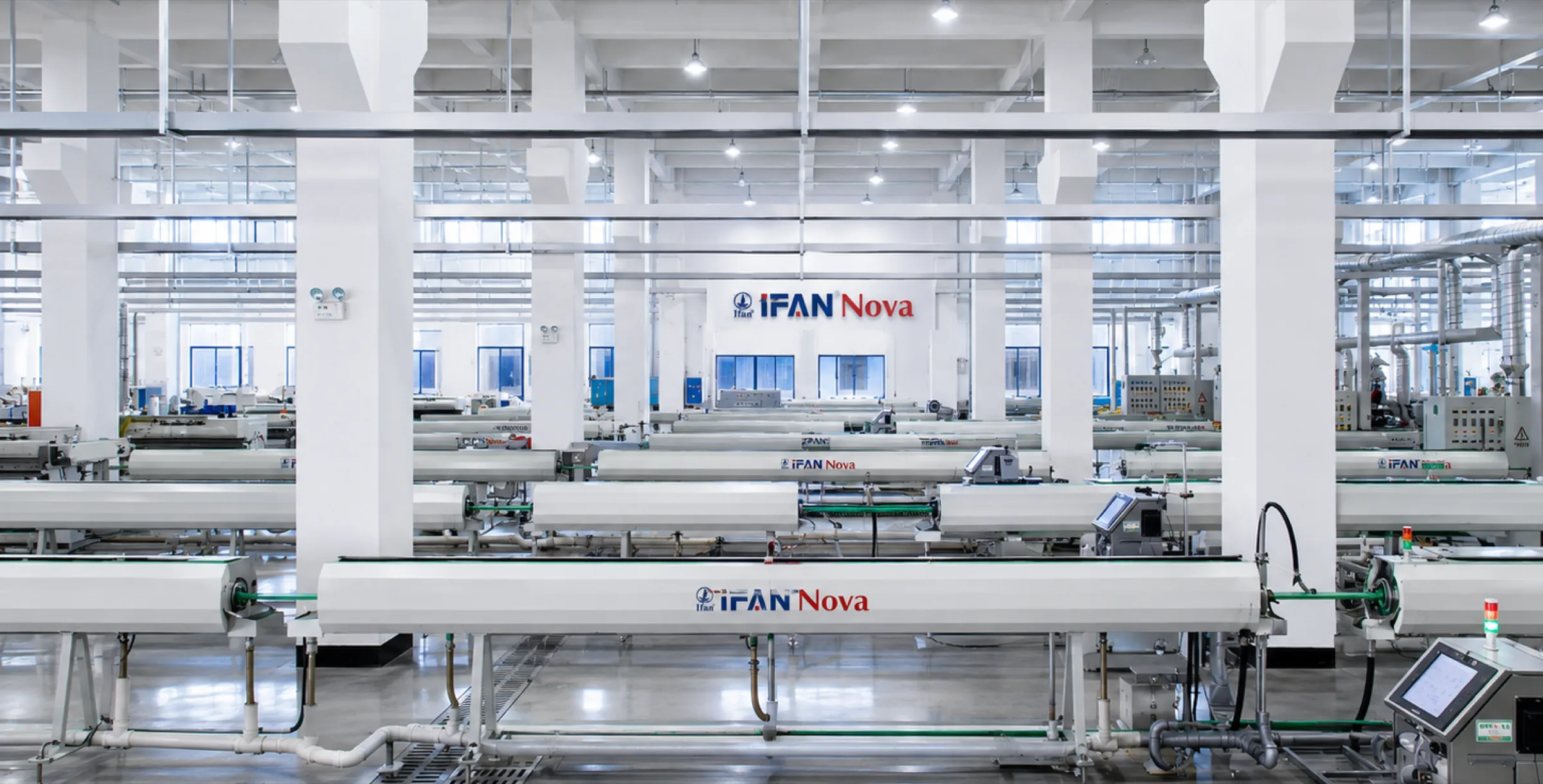
Continuous pipe-wall printing places the brand and product identification where installers can read them. Agree the approved text and its repeat pattern before production.
The catalogue’s HDPE pipe example carries “GERMANY STANDARD DIN8077/8078”; this is not evidence that every compression fitting carries that wording or that current production conforms to it. DIN Media describes DIN 8077 as PP pipe dimensions and DIN 8078 as PP quality and testing. The PE families are DIN 8074 for dimensions and DIN 8075 for quality and testing. Standard scope does not establish product conformity: resolve the applicable standard, test evidence and approved print for the selected HDPE item.
Treat every proposed wall statement as a claim requiring evidence. A completed production run is difficult to correct, so review the proof before release rather than relying on a catalogue photo or a country slogan.
Provide a proposed print string for every size, including material, dimensions, batch identification and any requested standard or approval mark. Ask the factory to return permissible character count, repeat spacing, ink colours, marking method and an artwork proof. Do not authorise a certification mark without current evidence covering that product and permission to apply it.
For coloured plastic products, name a colour reference and request the compound or masterbatch identity. Ask for an approval sample and an agreed acceptance tolerance or method. Confirm whether a colour or formulation change affects the applicable testing and approval scope. Record who may authorize a later substitution; a matching visual shade alone does not identify the material.
The table below documents catalogue-listed dimensions and series. It does not show permitted colours, colour matching capability or current availability. Use it to identify the products that need a separate colour and compound confirmation:
| System (per our catalogue) | Catalogue-listed dimensions | Series and item codes | Notes for a branded programme |
|---|---|---|---|
| PPR PN20 | Pipe 20×2.8, 25×3.5, 32×4.4 mm, 4 m lengths | 1103 pipe (3 codes); 1138 fittings (75 unique item codes) | Confirm application approval and jointing method |
| UPVC 806 PN16 (catalogue label) | WP55 pipe Φ20×2.0 to Φ110×7.2 mm, 4 m lengths | 1806 series: 203 items, including ball valves and solvent cement | Separate UPVC and CPVC grades; confirm service temperature and approval scope |
| HDPE PN16 | Φ20×2.3 to Φ110×10 mm | 1603 (136 codes) and 1604 (123 codes) compression / push-fit series | Compression jointing — no welding equipment needed on site |
| PVC 902 drainage | Pipe Φ32–110 mm; 1902 fittings Φ32–160 mm; non-pressure only | 1902 series: 139 unique item codes | Must never be quoted or branded as a pressure system |
| PEX | Compression 2114 (S16/S20); press-fit 2121 (16/18/20/25/26/32 mm) | 2114: 29 codes; 2121: 111 codes | Fitting-series listings; confirm permitted marking and packaging |
| Brass | 2405 series, 1/4″ to 1″ | 2405: 187 items | Confirm metal finish, permitted marking and packaging separately |
The WP55 row is labelled UPVC 806 in the catalogue, while adjacent prose discusses CPVC. Confirm resin identity, service temperature and applicable approval for the selected item; the table does not establish a verified CPVC PN16 range.
A note on those counts, because they are easy to get wrong. The figures above are the item counts our catalogue states for each series — 1138 runs 1138-1 to 1138-75, 1806 runs to 1806-203, and so on. They describe how many distinct parts a series contains, not how many you have to order. If a supplier quotes you a series size, ask what it is actually counting, and ask which of those items are stocked rather than merely catalogued.
The published catalogue shows pressure pipe through Φ110 mm and PPR pipe at 20, 25 and 32 mm. Treat these as the documented range, not a guarantee of every current production option. Confirm gaps before commissioning artwork. The pipe sizing charts show catalogue walls; the PEX entries do not publish a wall thickness or pressure class, so request those explicitly.
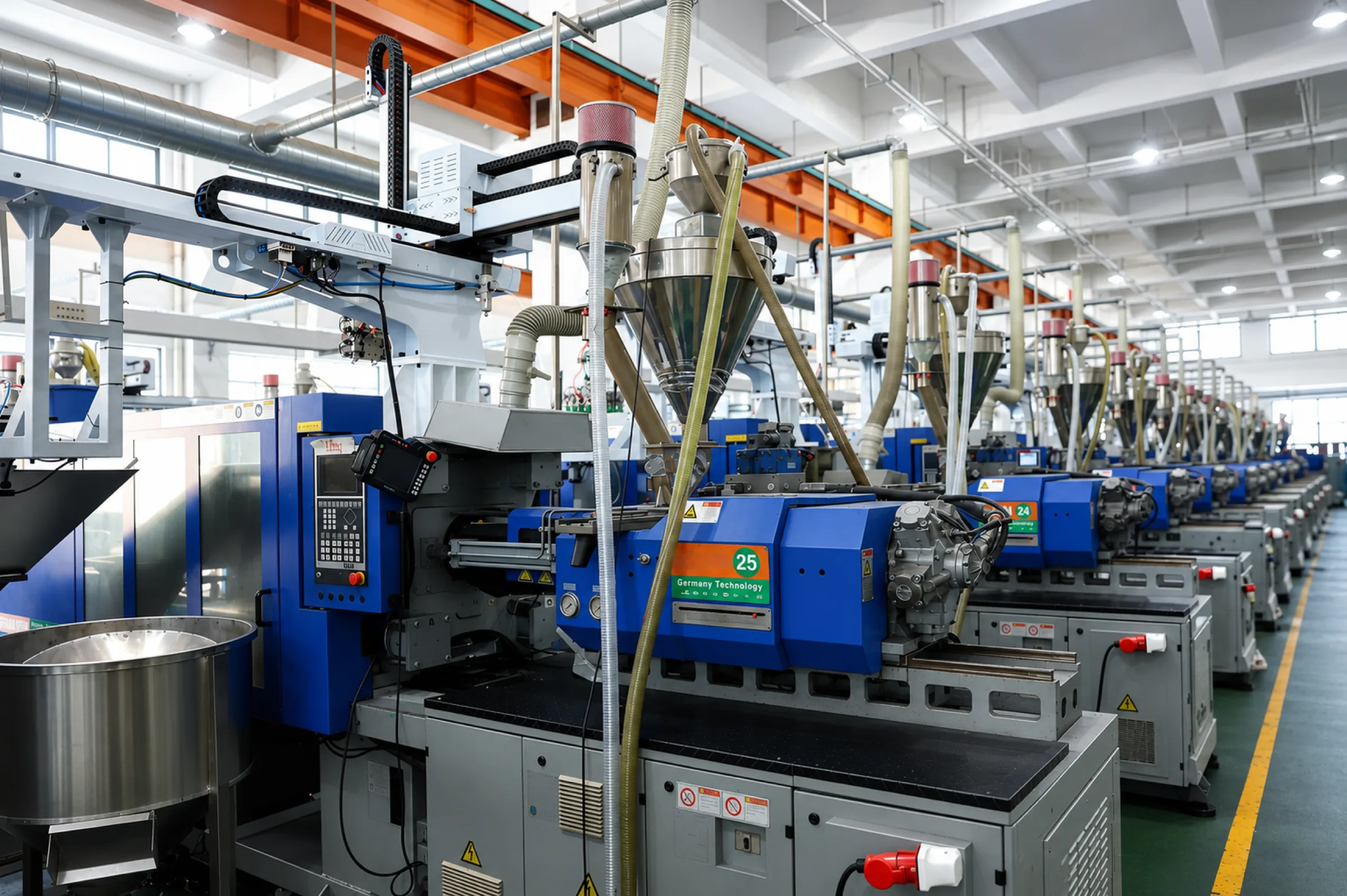
The catalogue self-reports 10,000 sets of moulds. This is first-party manufacturer information, not an independently established current tool inventory. It cannot identify the tool for your selected fitting or establish its condition, availability, ownership or exclusivity. Ask for the specific tool reference and proposed work against your drawing rather than using the total count as an approval criterion.
For the proposed fitting list, request the existing tool references and identify any dedicated work. Ask the following ownership and release questions before accepting a tooling charge.
For dedicated tooling, request separate confirmation of drawing approval, tool cost, owner, storage, maintenance, permitted users and the release process. Ask which files and physical tools can transfer, and under what conditions. These terms require agreement for your project; this article supplies no fixed tooling price or completion date.
A usable private-label enquiry defines both the range and the change from standard stock. The IFANNova contact form asks for target market, product lines, first-order quantity, timeline and tender/project standard. Include a size-by-size schedule in your message and state whether the quantity is pieces, metres or cartons. Annual demand helps planning, but keep it separate from the first order.
Ask the supplier to split standard stock, standard production and custom work. Minimums may apply by size, colour, print run or packaging batch. Request the basis and units for each quoted minimum; the following fields let you compare the reply with your actual order.
| Form field | Buyer input | Written supplier response |
|---|---|---|
| Target market | Country, application and distribution route | Applicable product scope and evidence required |
| Product lines | Material, size, class and fitting list | Available items and gaps in the proposed range |
| First-order quantity | Quantity and units per size; colours and artwork | Minimum basis, mixing rules and standard/custom split |
| Timeline | Need-by date and named delivery point | Production stages, start event and transport exclusions |
| Tender/project standard | Specification revision and requested marks | Compliance scope, missing evidence and permitted print |
Consolidating colours and carton designs can reduce setup complexity, but request the resulting minimum in writing. Confirm whether each size still needs its own production run. Use one agreed revision of the size schedule, artwork and packaging specification when you compare quotations.
Ask for prices by line item, tooling and artwork charges separately, quote validity, payment triggers and the named Incoterm point. Request timing from approved artwork and any agreed first-article approval, rather than treating your enquiry date as the production start.
This suggested buyer sequence settles scope, markings and permissions before spending on print setup or tooling. It is a procurement method, not a promise about IFANNova’s production order.
The catalogue’s PPR PIPE & FITTING section describes cleaned and crushed PPR waste, with recycled material not exceeding 10%, and asserts that quality is unaffected. This is the manufacturer’s stated position for that PPR section, not independent testing or a declaration for HDPE, PVC, PEX or brass. It is an upper limit, not measured content in your order. Request the selected material composition and order-specific supporting evidence.
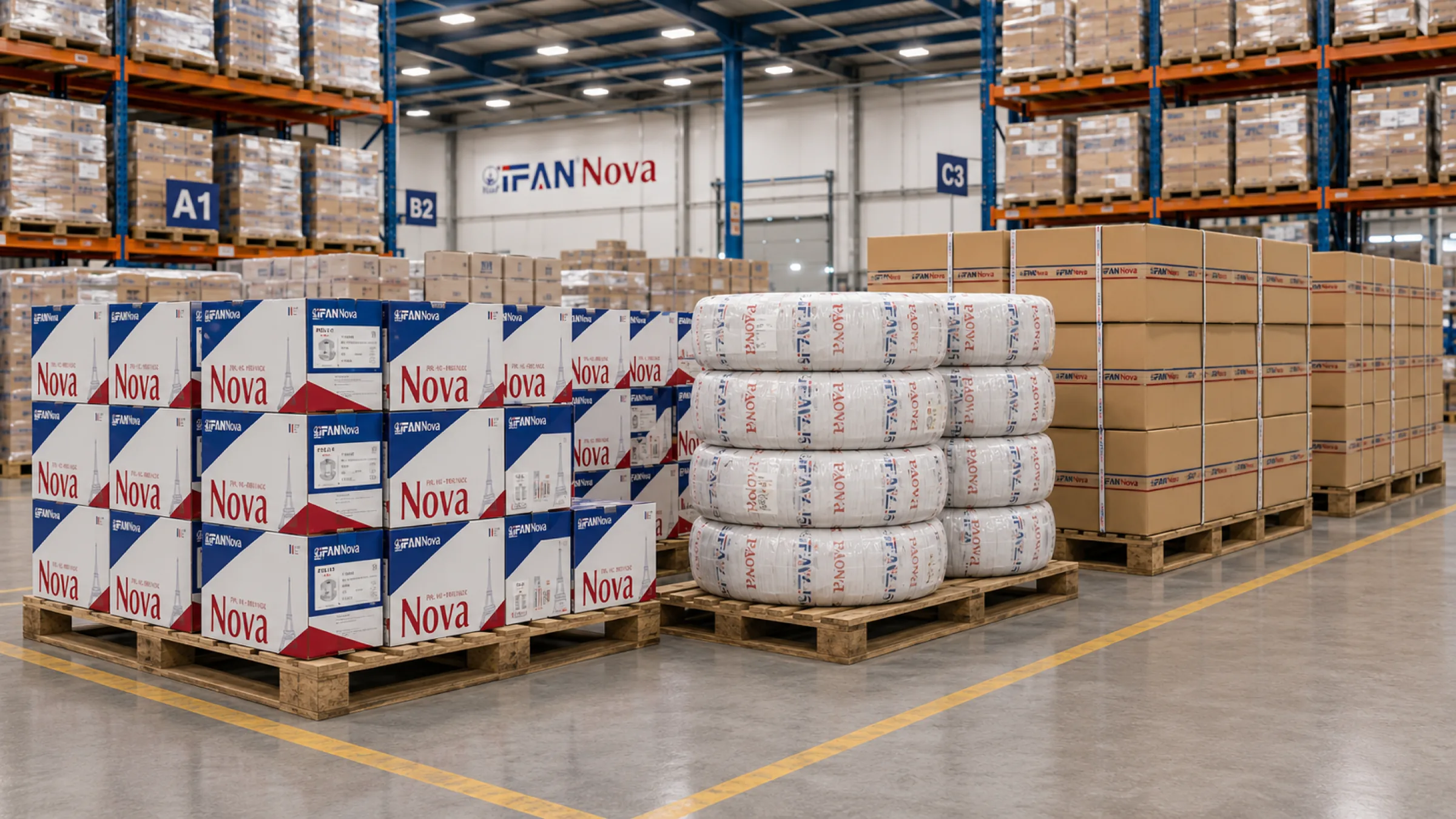
Send the defined schedule through the contact form and ask the supplier to confirm the available range, permitted branding and any gaps in writing. Ask about evaluation-piece availability and a quotation against the accepted revision. Treat the returned scope and terms as inputs to your decision; this guide promises no proposal format, response time or production commitment.
No. Confirm ownership, permitted users, storage, maintenance and the transfer procedure in writing. A brand label or tooling payment does not establish those rights.
State the first-order quantity and units for each size, material and colour. Keep annual demand separate. Ask which minimum applies to each line and whether sizes may be mixed.
State the required delivery point and need-by date. Ask for production stages, the clock start event, approval dependencies and transport exclusions. Confirm the schedule against the accepted artwork and size list.
Request the current certificate number, issuer, scope and validity for the specific product. Obtain confirmation that the requested marking is permitted before approving the print proof.