Not a sales pitch for cutting out the middleman. An honest account of what each route gives you, what it costs you, and where a trader is genuinely the better answer.
Nobody searches for “buy direct from a Chinese pipe factory” because they want a philosophy lecture. They search because a quotation is in front of them, the price beats the trading company they have used for three years, and they cannot work out what they are giving up.
The real worry is not price. It is: when the goods arrive and something is wrong, who is on the hook, and can I reach them? Sample consistency, certificates and origin paperwork are all sub-questions of that one.
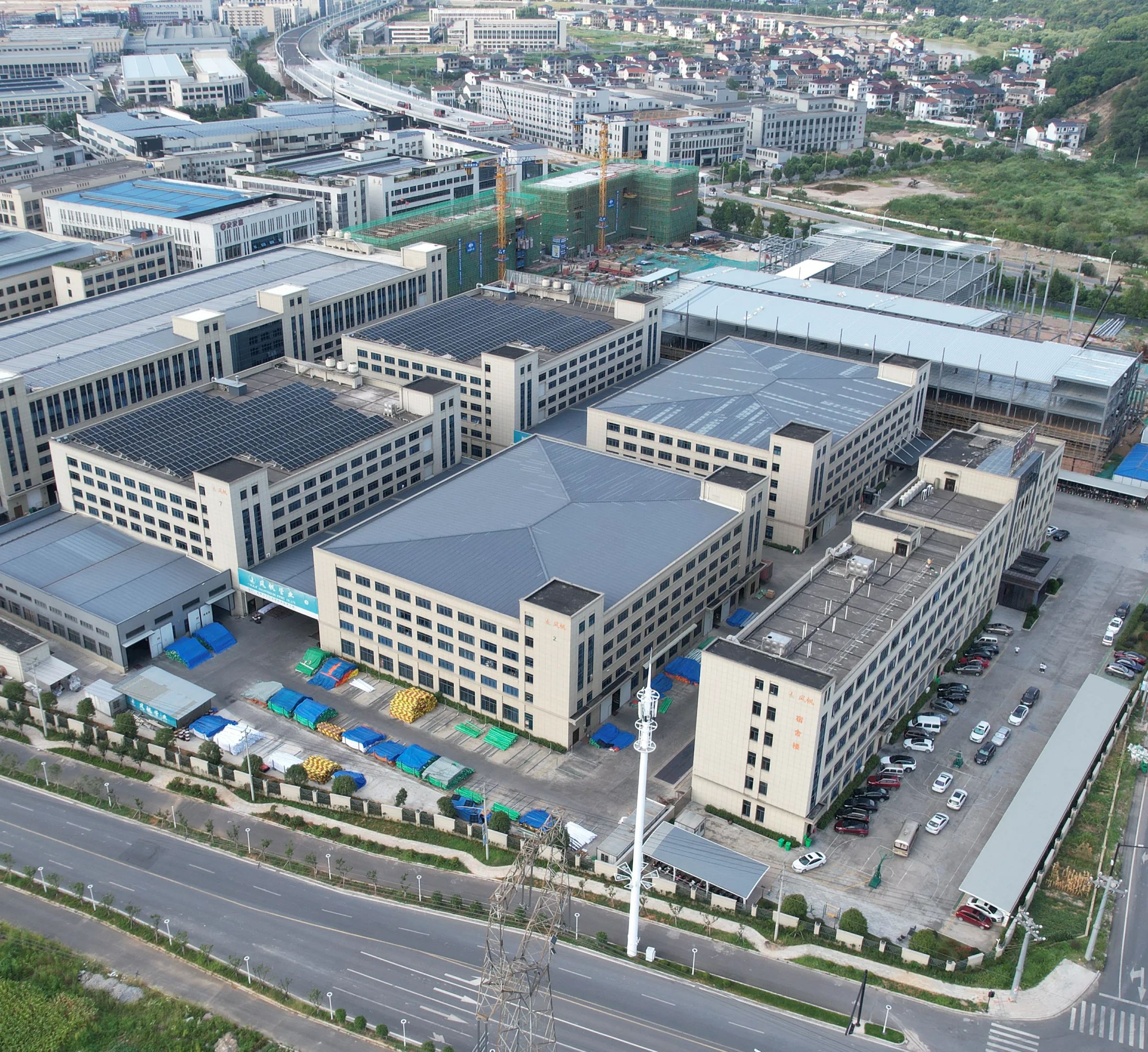
We should declare our position immediately, because it should change how you read this. IFANNova is a French brand, and our pipes and fittings are manufactured at our own plant, Zhuji Fengfan Piping Co., Ltd, in Zhuji, Zhejiang, China (per our catalogue). We are the factory, so we have an obvious interest in you concluding that factories beat traders. Every structural claim below is tied to a named published document, and where we could not find one, we say so rather than fill the gap. Certification routes and GCC market specifics are covered on our Middle East market page.
“We are a factory” is said by almost everyone, including companies that have never operated an extruder. Rather than argue about labels, look at where the roles genuinely diverge in the paperwork.
The clearest published example is proof of origin. The World Customs Organization’s Guidelines on Certification of Origin (July 2014, updated June 2018) accepts that an exporter is frequently not the producer. Section 6.2.1 allows exporters who are not the producer to apply for a certificate of origin, “provided that the non-producing exporter is in possession of or has access to the necessary information to substantiate that the origin criteria are satisfied.” Such an exporter “would need to obtain information from the supplier, which is generally referred to as a supplier’s declaration.”
That proviso contains the whole distinction. A trader can obtain proof of origin — nothing prohibits it. But it does so on a condition a producer satisfies automatically and a trader satisfies only by asking someone else. So the honest formulation is not “traders cannot give you documents.” It is that a trader’s documentation is derivative: it rests on a declaration obtained from a factory you may not be able to name. If that chain holds you never notice; if it breaks you find out during a verification rather than a negotiation. And the WCO is specific about who fields those questions — under self-certification the exporter “would have to bear the responsibility on the content stated in the document” and “shall respond to such verification request sent directly by the Customs authority of the importing country” (section 7.2). The exporter answers from records, and records sit with whoever ran the production.
| Question | Counterpart is the producer | Counterpart is a non-producing exporter |
|---|---|---|
| Can they apply for a certificate of origin? | Yes | Yes, but only with possession of or access to the substantiating information (WCO 6.2.1) |
| Where does origin evidence come from? | Own production records | A supplier’s declaration from the actual manufacturer (WCO 6.2.1) |
| Who answers a customs verification request? | The exporter, from its own records | The exporter, but the records sit with a third party (WCO 7.2) |
| Who can change the production process? | The company you contracted with | A company you did not contract with |
| Who can be audited on site? | The company you contracted with | The plant, if the trader agrees to disclose it |
None of this makes a trader a bad supplier. A trading company that owns its supplier relationships, runs its own QC and discloses its plants is often a better counterpart than a factory with a weak export department. The point is narrower: the structural difference is about where the evidence lives, and you should price that rather than assume it away.
ISO/IEC 17050-1:2004 governs the supplier’s declaration of conformity, and its Note 1 defines the document precisely: “‘Supplier’s declaration of conformity’ is a ‘declaration’ as defined in ISO/IEC 17000, i.e. first-party attestation.” That means the supplier attesting about itself — a statement, not an independent finding. The standard also deprecates the term “self-certification.”
That does not make it worthless. Clause 5 requires the issuer to be “responsible for issuing, maintaining, extending, reducing, suspending or withdrawing the declaration and the conformity of the object to the specified requirements,” and requires the declaration to “be based on results of an appropriate type of conformity assessment activity (e.g. testing, measurement, auditing, inspection or examination).”
Two things follow when a supplier emails you a PDF. A declaration must have something underneath it — so the right follow-up is never “do you have a certificate?” but “what assessment is this based on, and can I see it?” And attaching a third-party report does not shift the burden: the same standard’s Introduction states that references to first-, second- or third-party assessments “are not to be interpreted as reducing the responsibility of the supplier in any way.” Ask who signed it, then ask whether the signer runs the line.
The joint ISO/IAF ISO 9001 Auditing Practices Group is blunt about a distinction most buyers miss: “Scope of ISO 9001, scope of Quality Management System (QMS), scope of Certification and audit scope refer to different things” (Guidance on Scope and applicability, Edition 2, 2020-02-26, © ISO & IAF). Under ISO 9001 clause 4.3 “the scope shall state the types of products and services covered,” and the same paper includes a section on “Scopes of certificate smaller than scopes of QMS.”
Translated into a buying instruction: read the scope line, not the logo. “Manufacture of plastic injection moulded components” is not “manufacture of PP-R pressure pipe and fittings.” A certificate held by a trading entity covers that entity’s processes — legitimately order handling and supplier management, rather than extrusion.
Our own position: our plant’s certifications include SKZ, CE, WRAS, DVGW, SGS, TSE, GOST-R, ISO 9001 and ISO 14001 (per our catalogue). Certificate numbers, validity dates and exact scope wording are Coming soon — we issue scans against your specific product list at quotation stage, precisely because a scope line you cannot audit is not evidence.
A further trap: buyers treat any recognised test document as a passport, and it usually is not. SASO publishes that it issues three distinct electrotechnical certificate types — “the IECEE national recognition certificate, the IECEE CB scheme certificate and the Conformity Certificate SASOEX” — where the recognition certificate confirms compliance “taking into account national differences” (SASO, official IEC certificates page). That is the electrotechnical sector, not plastic piping, and we will not stretch it. It simply shows that a test-scheme certificate and a national acceptance are different objects, and the issuing body says so itself.
On validity periods and factory-surveillance frequencies we must report a gap. We searched official sources and found that they either do not publish that information or were not accessible to us; every circulating figure traces only to certification vendors. We found no citable basis, so we publish no number — confirm validity and surveillance requirements with your certification body or customs broker.
“The sample was perfect and the container was not” is the oldest complaint in importing. It is also where the internet gives the worst advice — confident guidance about golden samples, how many to retain, who keeps which, and what legal weight a signed sample carries.
We went looking for an authoritative basis and did not find one. Every source describing the golden-sample protocol was a sourcing agent or inspection company’s own marketing page; no standards body, government or industry association appears to define the practice, the number of retained samples, or its contractual weight. The circulating claims — three to four identical golden samples, one each for buyer, factory and third-party QC, and the assertion that a signed sample carries significant legal weight — we could not ground in any citable source and will not repeat as fact. The same applies to first article inspection: the authoritative definition is paywalled, and the widely repeated claim that ISO 9001 mandates FAI appears unsupported. Retaining a reference sample remains sensible commercial practice — just do not believe it is a standardised or legally weighted mechanism, because we cannot show you a document saying so.
ISO 2859-1:1999 “specifies an acceptance sampling system for inspection by attributes. It is indexed in terms of the acceptance quality limit (AQL)” (clause 1.1), with master tables for single, double and multiple sampling plans under normal, tightened and reduced inspection.
The standard states its purpose with unusual candour: the scheme exists “to induce a supplier through the economic and psychological pressure of lot non-acceptance to maintain a process average at least as good as the specified acceptance quality limit, while at the same time providing an upper limit for the risk to the consumer of accepting the occasional poor lot.” Note what that concedes — sampling caps the probability of a bad lot reaching you, it does not remove it. Three further details change how you should specify inspection, and most buyers get all three wrong:
That last point is the sharpest factory-versus-trader question here, and it is entirely practical. Ask which plant, which line, and over what date range your goods will be produced. A producer answers from a production plan. A consolidator answering for three sub-suppliers cannot make the lot uniform, however good its intentions.
Buyers routinely believe a strong Incoterm protects them on quality. It does not, and the ICC says so in the official Introduction to Incoterms 2020. Paragraph 7 lists what the rules do not deal with, including “whether there is a contract of sale at all; the specifications of the goods sold; … the remedies which can be sought for breach of the contract of sale” and “the transfer of property/title/ownership of the goods sold.” Paragraph 6 is blunter still: the rules “are NOT in themselves—and are therefore no substitute for—a contract of sale” (ICC Incoterms 2020 official Introduction, published by ICC Switzerland, national committee of the ICC).
CIF does not mean the goods are right. DDP does not mean the goods are right. An Incoterm allocates cost and risk of carriage — it says nothing about specification, nothing about remedies, and it does not even transfer ownership. So every quality assurance you think you have must live in the sales contract: the specification, the inspection standard and AQL, the responsible authority named under ISO 2859-1 clause 3.1.12, the lot definition, and the remedy for non-conformity. If those are not in the contract, no Incoterm rescues them.
| What buyers assume it covers | Where it actually has to be set | Source |
|---|---|---|
| “The Incoterm guarantees quality” | Specifications of the goods sold — in the contract of sale | ICC Incoterms 2020 Introduction, para 7 |
| “The Incoterm gives me a remedy if goods are bad” | Remedies for breach — in the contract of sale | ICC Incoterms 2020 Introduction, para 7 |
| “The Incoterm means I own the goods at handover” | Transfer of title — contract and applicable law | ICC Incoterms 2020 Introduction, para 7 |
| “We agreed Incoterms, so we have an agreement” | The rules are no substitute for a contract of sale | ICC Incoterms 2020 Introduction, para 6 |
| “A certificate means someone independent checked” | Depends — a supplier’s DoC is first-party attestation | ISO/IEC 17050-1:2004, clause 3 Note 1 |
We manufacture. Our plant is Zhuji Fengfan Piping: 30+ years of operation, 1,000+ employees, exports to 118+ countries, 10,000 moulds, 120,000 m² of plant area, 24h online service (per our catalogue). That last figure is a response-time commitment, not a lead-time commitment.
And here is what a trading company would not volunteer about itself. Being the factory does not mean we can make everything. Our pressure pipe production tops out at Φ110 mm across every system we run.
| System | Pipe range | Fittings | Honest limit |
|---|---|---|---|
| PPR PN20 | Series 1103, 20 / 25 / 32 mm only, 4 m lengths | Series 1138, 75 items | Nothing above 32 mm — a narrow range, and we say so |
| UPVC/CPVC 806 PN16 | WP55 pipe Φ20–110, 4 m lengths | Series 1806, 203 items | Φ110 ceiling; heat-resistance figures for the 806 system describe the CPVC grade, not UPVC pipe on its own — a material property claim, not a service rating |
| HDPE PN16 | Φ20–110 | Series 603/604 compression, weld-free | Φ110 ceiling; pipe is marked “GERMANY STANDARD DIN8077/8078” — see note below |
| PVC 902 drainage | Pipe Φ32–110; 1902 fittings Φ32–160 | Per 902 series | Non-pressure drainage only — the Φ160 here is not a pressure size |
| PEX | 2114 insert / 2121 press, 16–32 mm | Per series | Small diameter only |
| Brass fittings | Series 2405, 1/4″ – 1″ | — | Small diameter only |
All ranges above are per our catalogue. We cannot supply DN150–DN400 pressure mains. If your enquiry contains them we will say they are outside our production rather than quote them through someone else’s factory — which is, incidentally, exactly the behaviour buyers are trying to avoid when they go direct in the first place.
On the HDPE marking, since this page is about reading documents honestly: our HDPE pipe carries the printed legend “GERMANY STANDARD DIN8077/8078” (per our catalogue). We are reporting what is printed on the pipe wall — not stating that the pipe conforms to those documents. Note for your own checking that DIN 8077/8078 are polypropylene standards, while polyethylene is addressed by DIN 8074/8075. If your specification names a standard, raise it at enquiry stage so we can confirm what can and cannot be evidenced before you write us into a submittal.
What we will not publish here or anywhere: customer names, project references, tonnages, prices, MOQs, lead times, freight rates and duty rates. Those are Coming soon or quoted against your actual list. And to close the brand question: IFANNova is a French brand, the pipes are made in China at our own plant, and we are not implying French manufacture — better you read that here than discover it on a certificate of origin.
If a supplier gets defensive at any of those questions, that is information. If a supplier answers all of them and one answer is “no, we cannot do that,” that is better information.
And a closing caution against the conclusion we would most benefit from you drawing. Going direct changes who holds the evidence. It does not change the rest: it does not turn an Incoterm into a quality guarantee, remove your need for a written specification and remedy, or make a certificate cover a scope it does not name. It does not eliminate the risk of a bad lot — ISO 2859-1 caps that risk rather than removing it. And it does not give you what a good local stockist provides: shelf availability, local credit, and someone in your time zone. If you have no QC capability and no budget for inspection, a trading company’s margin was partly buying a function you would now perform yourself. That is not a reason to avoid direct sourcing — it is a reason to staff it.
Send the BOQ with diameters, the destination port, the named standard in your specification, and your submittal deadline. You get back what we can supply, what falls outside Φ110 and has to come from elsewhere, which documents we can issue, and a price and lead time against your actual quantities — or a straight “this is outside our range” within one working day.
Both routes are legitimate.
OEM keeps your design portable; ODM keeps the moulds with the factory.
Pipe is a volumetric cargo.