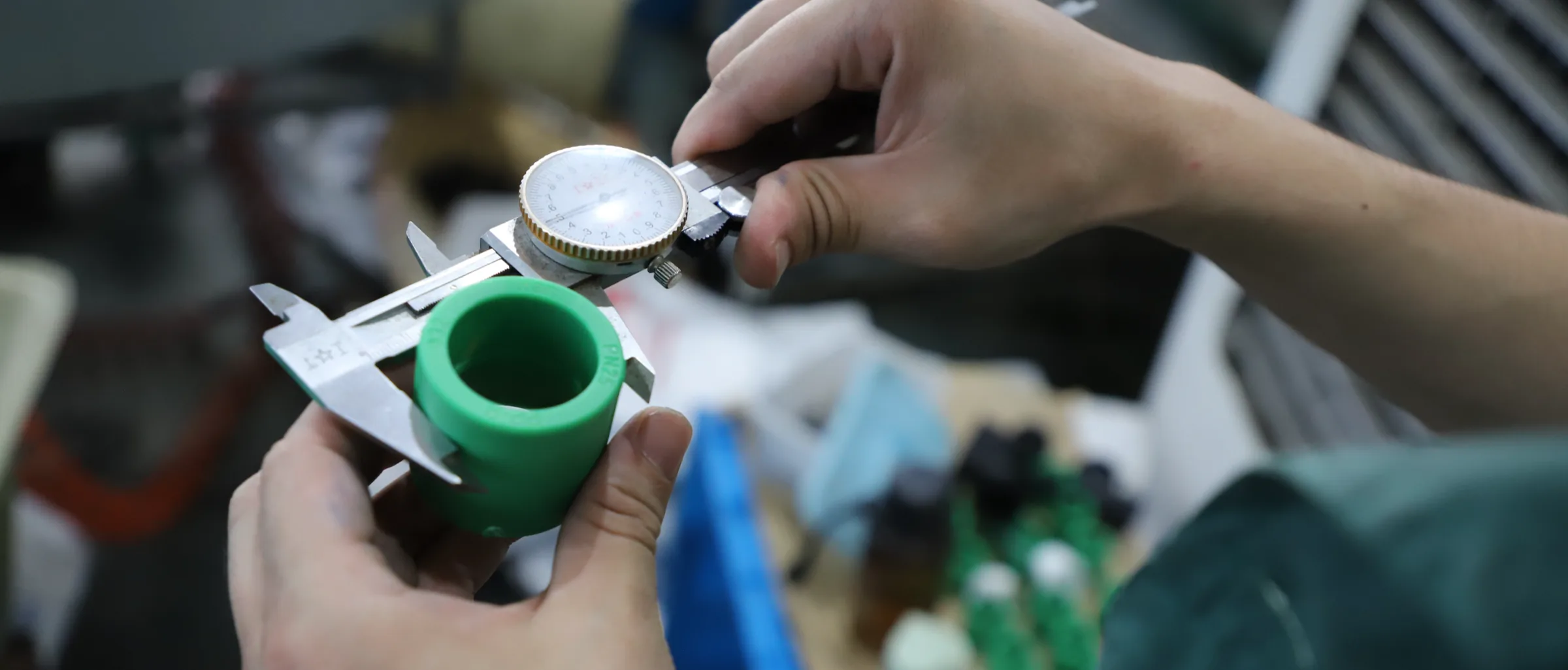
When your compliance team or tender board asks the environmental questions, “eco-friendly” is not an answer — facts and documents are. IFANNova piping is built on both: non-toxic polymers made of carbon and hydrogen only, recyclable PPR and HDPE materials, a transparent max 10% controlled in-house regrind policy with quality unaffected, 50+ year CPVC/HDPE service life, and manufacturing under an ISO 14001 environmental management system. A French brand, made in our own facility, serving 118+ countries. REACH compliance documentation — available on request.
Environmental claims in the pipe trade are cheap; material facts are not. IFANNova’s environmental case rests on four things a compliance officer can actually check — composition, recyclability, regrind transparency and lifespan — not a green sticker. The least wasteful pipe is the one you never have to replace.
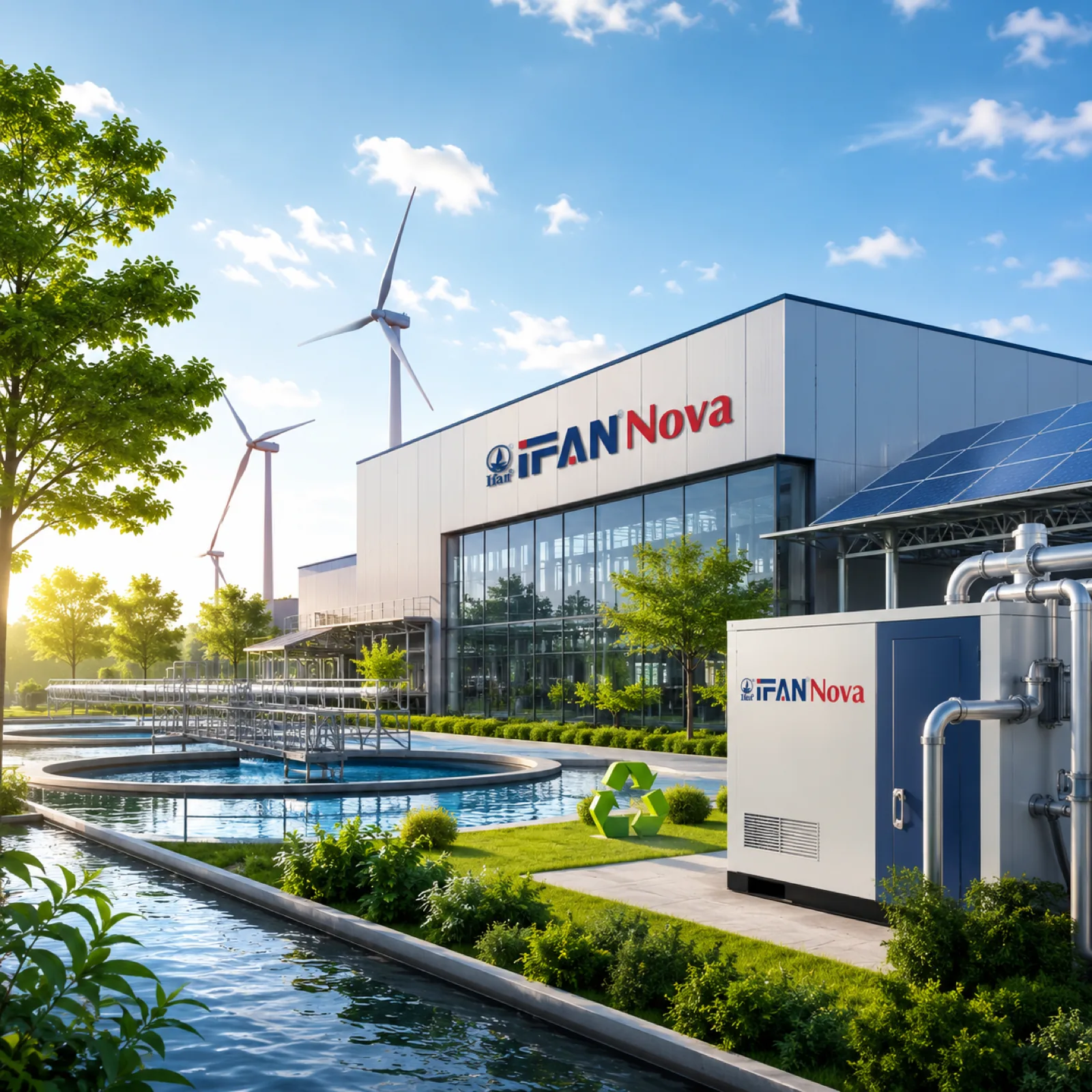
Each fact below is confirmed by our own material and product programme — not a marketing line. Composition and recyclability answer the substance question; disclosed regrind and 50+ year life answer the circular-economy and lifecycle-waste question that now sits inside serious tenders.
| Material fact | What it means | Why compliance teams care |
|---|---|---|
| Carbon-hydrogen composition | Non-toxic polyolefin polymers | Clean substance profile for REACH review |
| Recyclable PPR & HDPE | Reprocessable thermoplastics, not landfill | Meets circular-procurement wording in tenders |
| Max 10% in-house regrind (PPR) | Controlled, disclosed, quality unaffected | Transparent recycled-content answer, no surprises |
| 50+ year CPVC/HDPE service life | Fewer replacement cycles | Lower lifecycle waste per installed metre |
| In-house regrind loop & material grades | Coming soon | Provided on request |
Good materials can still be made badly. That is why tenders and EU-headquartered buyers ask not just “what is the pipe made of?” but “how is the factory managed?” Our manufacturing base — a 120,000 m² facility with 30+ years of production experience — operates under an ISO 14001 environmental management system: resource use, waste streams and continual improvement, audited as a system rather than promised as a slogan.
For a tender’s environmental chapter, that gives you a nameable, citable framework; for a compliance file, it means the regrind policy and material control on this page sit inside a managed system, not ad-hoc practice. ISO 14001 runs alongside ISO 9001 on the quality side — see Quality Control & In-house Testing — so environment and quality are governed by the same discipline.
ISO 14001 certificate number, issuing body and scope statement — provided on request.
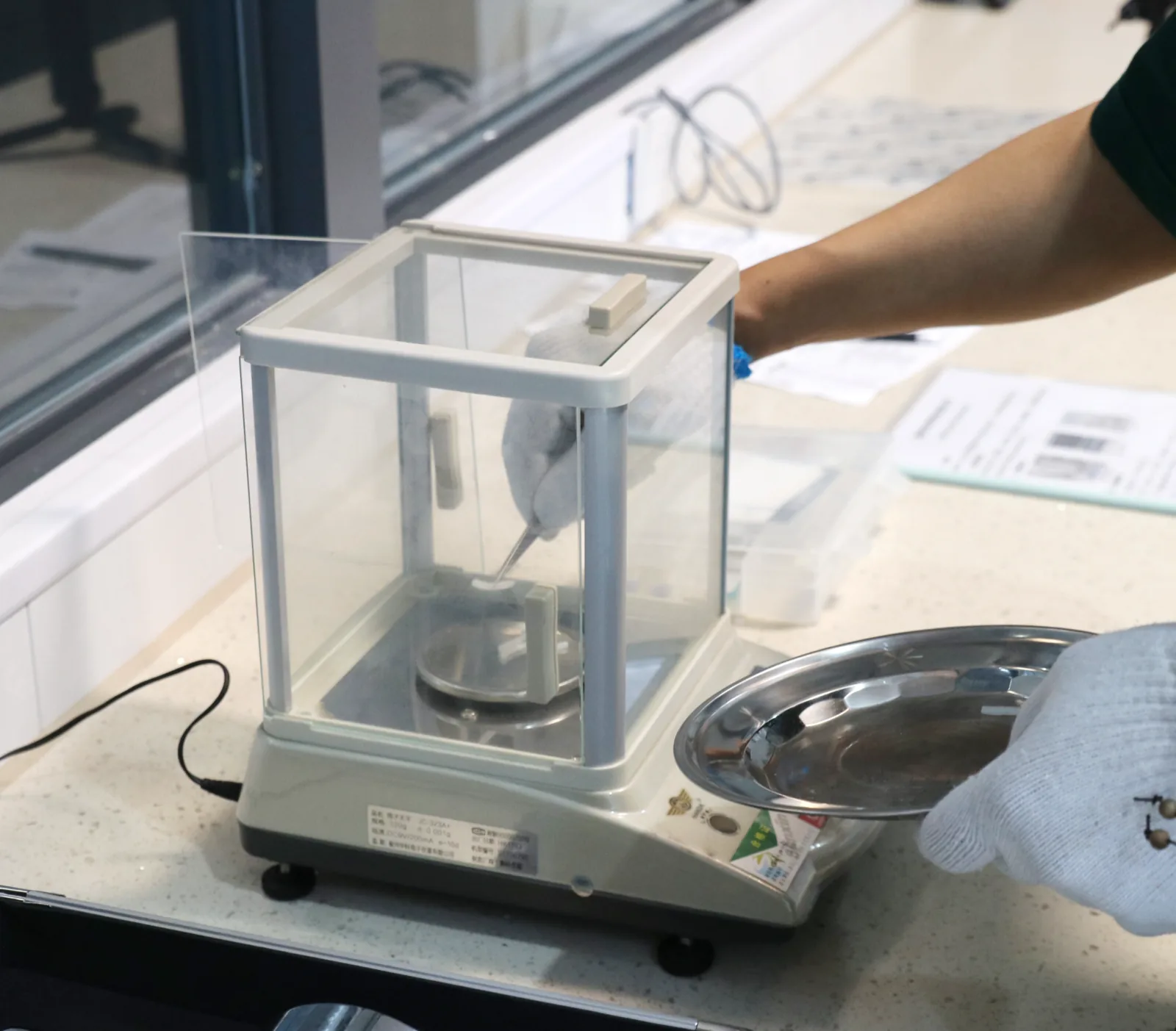
ISO 14001 is the international standard for managing environmental impact. On our floor it maps to concrete practice — including the controlled in-house regrind loop that sits behind the material facts above — and on your side it gives procurement wording you can actually cite.
| What ISO 14001 covers | On our factory floor | What you can use it for |
|---|---|---|
| Environmental policy & responsibility | Defined at facility level | Tender environmental chapter |
| Resource & waste management | Includes controlled in-house regrind loop | Circular-economy wording, documented |
| Legal & compliance obligations | Tracked as a system requirement | Supplier ESG questionnaire answers |
| Continual improvement | Audited management cycle | Long-term supplier justification |
For an EU or UK importer, REACH is not a marketing checkbox — it is a legal exposure. An importer must be able to show that articles placed on the market do not contain substances of very high concern (SVHC) above threshold without disclosure. IFANNova’s starting position makes that conversation short: our PPR and HDPE piping is made from polyolefin materials composed of carbon and hydrogen only — non-toxic polymers with a clean substance profile, produced from 100% high-grade raw material under an ISO 14001-managed process.
On documentation, we say exactly what we can stand behind: a REACH compliance declaration for your specific product and order is available on request — prepared against your product mix and destination, so your compliance team files a document that matches the goods, not a generic PDF pulled off a website. If your process requires SVHC list screening or destination-specific statements, put it to us before production and it becomes part of the order file.
| Your compliance question | Our answer | Status |
|---|---|---|
| “What substances are in the pipe?” | Carbon-hydrogen polyolefins, non-toxic | Fact — stated on this page |
| “Can you issue a REACH declaration?” | Declaration per product & order | Available on request |
| “SVHC screening against the current list?” | Reviewed against your requirement pre-order | On request |
| “Carbon footprint / EPD data?” | Being prepared | Coming soon — not published until real |
A REACH declaration is prepared per product and order — we do not represent it as a “certificate,” because REACH has no certificate to hold. Request the REACH declaration for your order →
EU tenders specify metric outside diameters, UK and legacy drawings mix in inches, and project specs often call up DN nominal sizes — the same pipe wearing three names. Mis-matching them is one of the most common (and most avoidable) causes of wrong-size orders in cross-border piping trade. The table below gives the standard trade equivalents used for plastic pressure pipe (PPR, HDPE, UPVC/CPVC). These are nominal equivalents, not exact mathematical conversions — 20 mm OD is traded as 1/2″, even though 0.5 inch is 12.7 mm — because the inch designation refers to the historical nominal bore, not the outside diameter.
| Outside diameter (mm) | DN (nominal) | Inch equivalent |
|---|---|---|
| 20 mm | DN 15 | 1/2″ |
| 25 mm | DN 20 | 3/4″ |
| 32 mm | DN 25 | 1″ |
| 40 mm | DN 32 | 1-1/4″ |
| 50 mm | DN 40 | 1-1/2″ |
| 63 mm | DN 50 | 2″ |
| 75 mm | DN 65 | 2-1/2″ |
| 90 mm | DN 80 | 3″ |
| 110 mm | DN 100 | 4″ |
For how these sizes map to PPR wall thickness, PN ratings and product ranges, see our guide: PPR Pipe Sizes Explained.
100% high-grade raw material · ISO 14001 environmental management · ISO 9001 quality · REACH declaration & ISO 14001 certificate details: Coming soon / on request.
Tell us your product (PPR / UPVC / CPVC / PVC / HDPE), your destination market and what your compliance or tender process requires. We’ll prepare the compliance document pack — REACH compliance declaration (per product and order), ISO 14001 system details, and a material composition note — plus tender-ready environmental wording if you’re bidding. If your reviewer wants something we don’t have yet (carbon data, EPD), we’ll say so honestly and tell you when it’s coming.
For the EU/UK importer & the compliance officer — our PPR and HDPE piping is made from polyolefin materials — carbon and hydrogen only, non-toxic polymers — from 100% high-grade raw material. A REACH compliance declaration for your specific product and order is available on request, so your compliance team files a document matched to the goods, not a generic claim.
For the importer & the project buyer — we disclose this openly: PPR production may include up to 10% controlled in-house regrind, with quality unaffected — every batch still passes the same in-house pressure, material and dimensional testing (see Quality Control). Inputs are 100% high-grade raw material; no third-party waste plastic enters production.
For the tender team & the ESG reviewer — yes. PPR and HDPE are thermoplastic polyolefins and the materials are recyclable — reprocessable rather than landfill-bound. Combined with a 50+ year service life for CPVC and HDPE systems, lifecycle waste per installed metre is low: fewer replacement cycles mean less material made, shipped and discarded.
For the contractor & the tender team — yes — manufacturing operates under an ISO 14001 environmental management system, alongside ISO 9001 for quality. Certificate number, issuing body and scope for your tender’s environmental chapter are provided on request, so you cite verified details rather than a web-page claim. See all approvals at Certifications.
For the engineer & the mixed-spec buyer — a 63 mm OD plastic pipe is traded as 2 inch (DN 50). Standard equivalents: 20 mm ≈ 1/2″, 25 ≈ 3/4″, 32 ≈ 1″, 40 ≈ 1-1/4″, 50 ≈ 1-1/2″, 63 ≈ 2″, 75 ≈ 2-1/2″, 90 ≈ 3″, 110 ≈ 4″. These are nominal trade equivalents, not exact conversions — see the full chart above.
For the ESG reviewer & the EU-headquartered buyer — carbon and EPD data are being prepared and are not yet published — Coming soon. We would rather tell you that than hand over numbers we cannot stand behind. What we can document today: material composition, recyclability, regrind policy, ISO 14001 system details and a REACH declaration on request.
Tell us your product family (PPR / UPVC/CPVC / PVC / HDPE), destination market (EU / UK / GCC / Francophone Africa / other) and what your compliance or tender process needs. We’ll send the compliance document pack — REACH declaration on request, ISO 14001 details, material composition note — and tender-ready environmental wording if you’re bidding.
Request the Compliance Document Pack