Thrust Blocks for Plastic Pipe: Specify the Load Path
A buried PE main reaches a valve through a mechanical adaptor. The pipe between fittings is fused; that does not tell the procurement team whether the adaptor can hold the axial load. The answer belongs to the joint assembly and its approved restraint detail. At an in-line unrestrained transition, Poisson-effect shortening can pull the PE pipe out of the joint. Ordinary directional thrust blocks do not resist that pull-out load: specify external joint restraint, an in-line anchor or a designed combination. The HDPE HVAC guide explains the shortening mechanism; here, check the transition’s load path.
Specify thrust restraint by tracing the pressure load to a resisting structure or the ground. Fully fused PE usually carries pressure thrust through its joints. An unrestrained socket, transition or fitting interrupts that path. Buried rubber-ring PVC needs restraint; solvent-jointed PVC needs its own design assessment. Neither the pipe colour nor its pressure rating answers the pull-out question.
- Pressure-tight and axially restrained describe different joint duties.
- Check transitions, end caps, bends, tees and valves on the actual drawing.
- Use the governing pressure and site soil capacity, not a copied block size.
- Heavy valve support and operating torque need checks even on fused PE.
Trace the axial load through every joint
Start with a marked-up plan, not a material list. Circle each place where flow changes direction, pipe size changes, the line terminates or a closed valve can leave pressure on one side. Draw the direction of the resulting load. Then follow that load through the fitting, each adjacent joint and the selected restraint. A concrete block cannot rescue an unidentified weak connection elsewhere in the assembly.
Ask for the exact joint model and its documented longitudinal load capability. A seal that holds water during a test is not evidence of pull-out resistance. Do not classify every compression coupling together: the manufacturer must identify whether that particular pipe-and-fitting combination is end-load bearing. If the answer is missing, leave the restraint decision open rather than entering “restrained” on the purchase order.
| Assembly | Document to check | Procurement decision |
|---|---|---|
| Fully fused PE | Fusion procedure and fitting design | Check transitions and special fittings |
| Mechanical PE joint | Axial rating for this assembly | Add restraint where required |
| Rubber-ring PVC | Approved buried restraint detail | Provide the specified restraint |
| Solvent-jointed PVC | System instructions and stress assessment | No automatic exemption |
Decide where fused PE still needs restraint
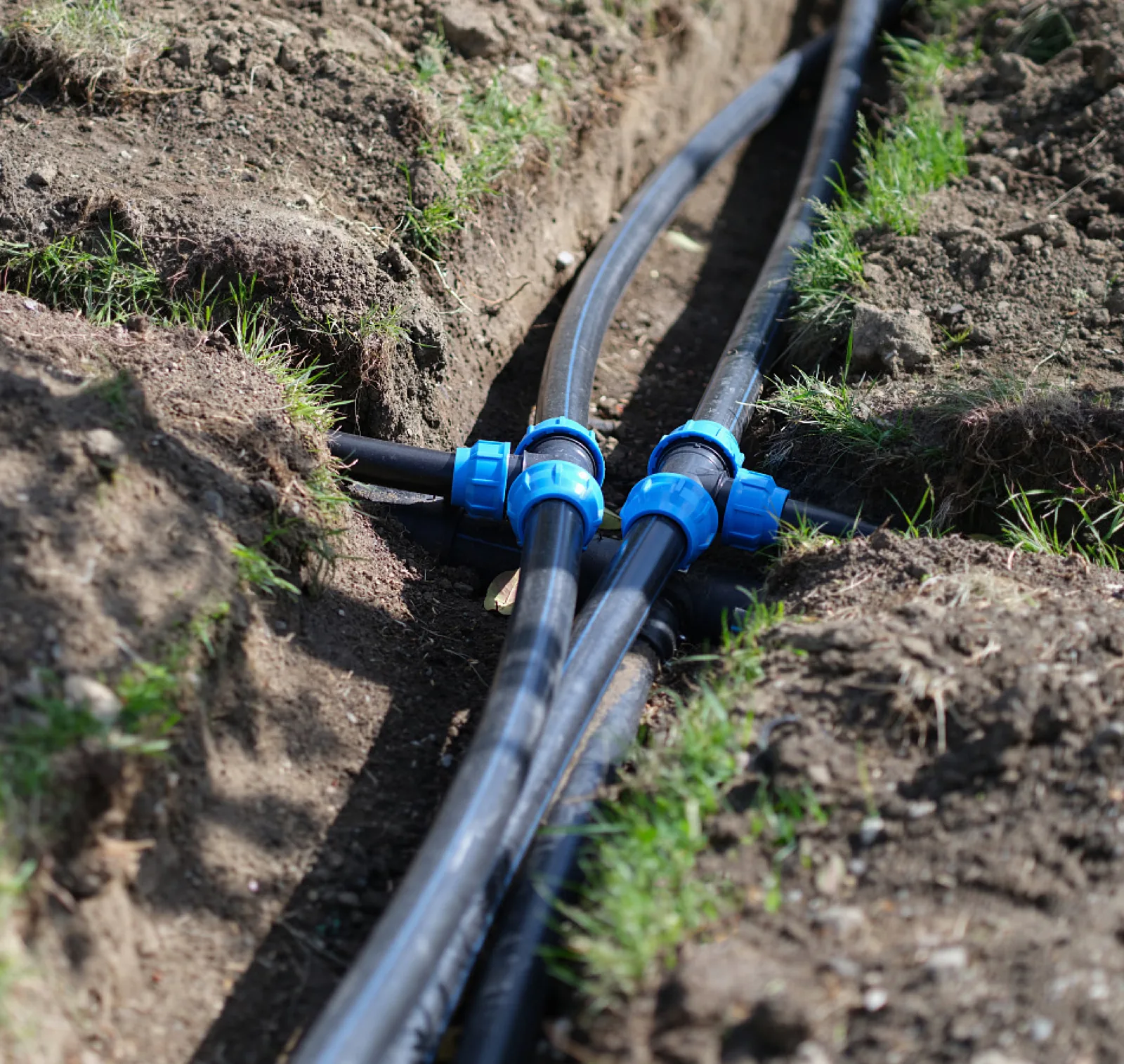
The PPI PE Handbook describes fully fused PE joints as restrained. In general, a fully fused system does not need thrust restraints for the pressure and thermal effects addressed in that guidance. That statement depends on continuity: ending the fused run at a non-restrained bell joint changes the condition.
PPI separately requires anchors at non-restrained transitions to other pipe materials to prevent joint pull-out. On a drawing, the useful question is where the fused run stops and how the next joint transfers tension. For a flange or mechanical adaptor, request the complete assembly detail rather than accepting a pipe-only data sheet.
Vinidex PE thrust guidance requires anchorage support for fabricated fittings incorporating welded PE pipe segments. Apply that requirement within the supplier guidance for the selected fitting system. Heavy fittings and valves also need independent support, and valve operating torque must be resisted. A valve support carries weight; a pressure restraint carries axial load. Show both duties on the detail. The joint types on an HDPE line identify the interfaces, but each selected component still needs its own approval.
Treat solvent-jointed PVC as a separate design case
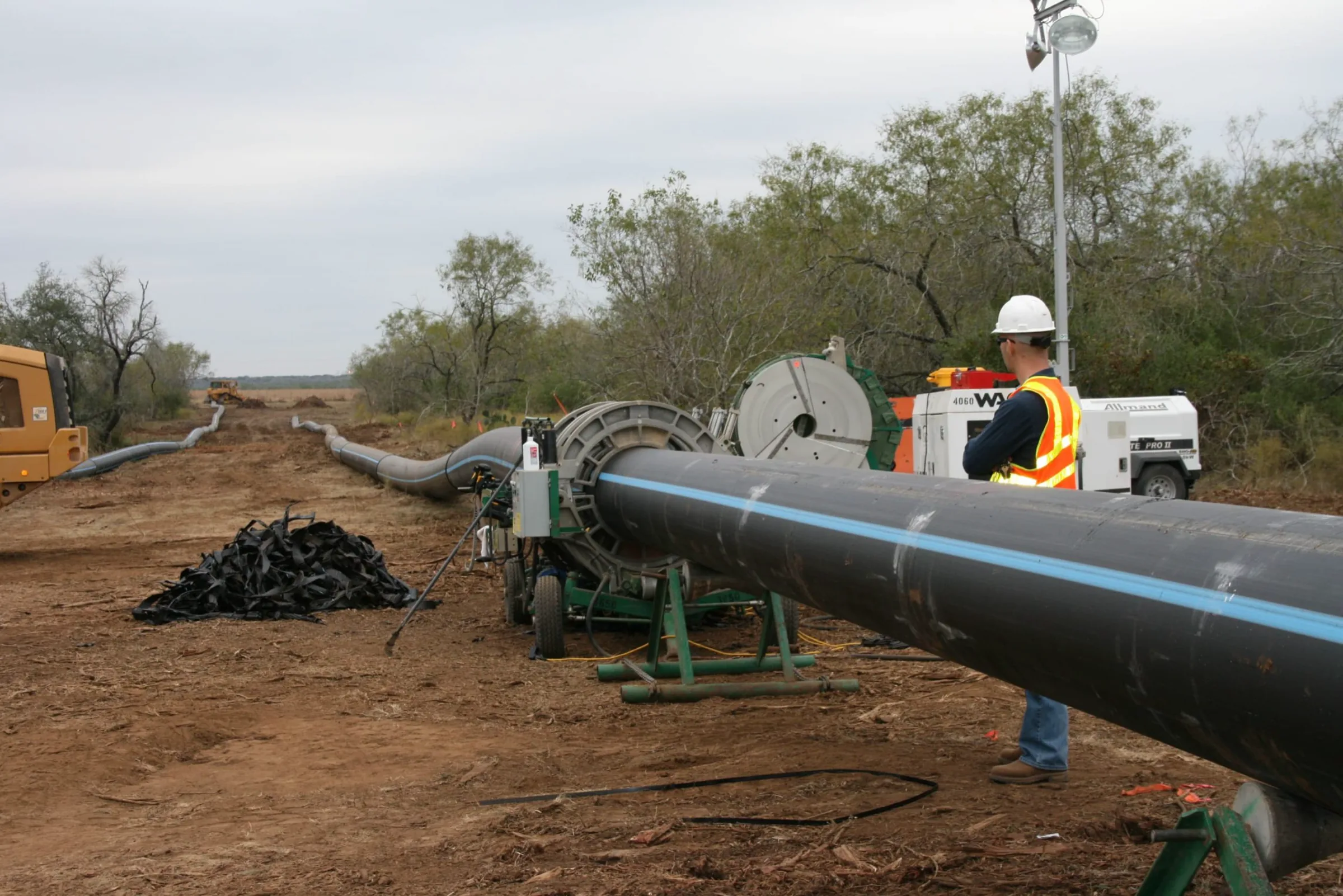
Solvent cementing can form a bonded joint rather than a sliding seal. The Vinidex jointing instructions describe chemical bonding as the socket and spigot surfaces cure. Correct cement, fit, preparation and curing are part of that assembly; a label saying PVC does not establish them.
The scope of the installation guidance matters. Vinidex says an above-ground solvent-jointed PVC line will not usually require thrust anchorage, while fitting stresses, pressure and diameter can make anchors appropriate. Its buried PVC guidance says thrust support may also be advisable in solvent-jointed systems. Copying the above-ground sentence into a buried water-main specification removes that qualification.
For the buried line, obtain the system supplier’s detail for the chosen pressure, joint configuration and restraint arrangement. If a contractor substitutes a rubber-ring fitting into a solvent-jointed run, reopen the load-path check. Joint substitution changes more than the installation method. Use the UPVC and CPVC product range to identify the component family; do not treat a product listing as an engineered restraint approval.
Choose the governing pressure and bearing surface
Ask the designer to name the pressure case that controls restraint: operating pressure, the assessed transient envelope or the specified field test. Vinidex’s PVC thrust-support method uses the maximum pressure, including water hammer, and says the field test will usually govern. A larger surge envelope must not disappear merely because a test pressure is already printed on the schedule.
The same method relates required ground-bearing area to resultant thrust divided by allowable soil bearing capacity. That bearing-area calculation is not the only ground check: Vinidex warns that shallow cover can permit shearing slip failure and sharply reduce bearing resistance. Obtain a complete soil analysis for shallow-cover or potentially unstable ground rather than treating the bearing-area quotient as sufficient. Its published example is a DN100 tee at 120 m water head in clayey sand with 1.0 m cover measured from the pipe centreline: 12.1 kN divided by 92 kN/m² gives 0.13 m². Those are that source’s example inputs and rounded result, not dimensions for an IFANNova installation.
Record the pressure basis, effective pressure area used by the selected method, direction of thrust and soil value together. Reject a copied calculation whose pressure area, pipe series or cover differs from the project. A plan label such as DN100 does not establish those inputs. Our force-main selection guide covers the separate pressure-and-surge decision; this page follows the resulting load into its restraint.
Place the block against ground that can resist it
A block needs a resisting surface. Loose reinstated trench fill is not interchangeable with the solid trench wall shown in a buried PVC detail. Before pouring, ask the site team to photograph the intended bearing face and identify any excavation, service crossing or disturbed ground behind it. Keep that record with the approved detail, not only in a general progress-photo folder.
Vinidex’s buried guidance places the wider face of the block against solid trench wall, with thrust acting through the fitting centreline. It also calls for a protective membrane where PVC meets concrete. Its PE guidance requires protection against abrasion at concrete contact. The installer needs the specified interface protection before concrete obscures the contact area.
Vertical bends need a different load check from horizontal bearing. The Vinidex thrust method treats upward thrust with the weight of the block and soil that will remain over it. Do not copy a horizontal block onto an upward bend, or count future cover that maintenance will remove. Ask the designer to show the resisting mechanism for that particular orientation and ground condition.
Buy the joint and restraint as one assembly
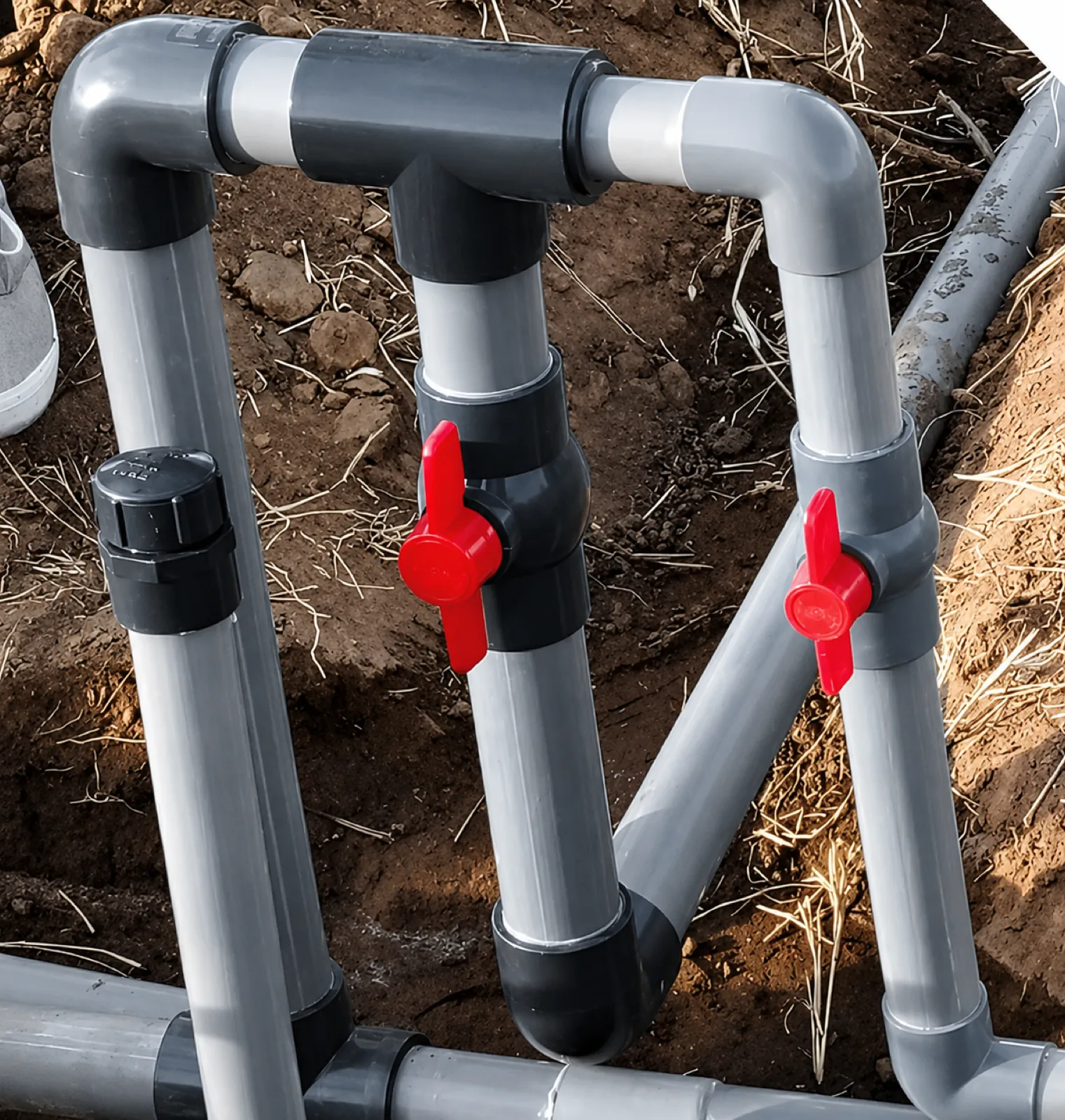
Send one assembly schedule: pipe material and diameter, wall series, fitting model, joint type, governing pressure, restraint detail and separate valve support. Include the test condition in the same request. Splitting the pipe order from the adaptor and restraint order makes it easier for each supplier to quote a different interface.
For IFANNova, the published pipe and fitting categories are a starting point for product identification. No SKU-specific axial capacity or approved project restraint assembly is established on this page. Request those documents for the proposed combination; a pressure rating alone cannot replace them. This guide does not claim that IFANNova supplies the civil restraint design or every component shown on a municipal drawing.
Lead time needs its own dated answer. Ask which pipe and fitting items are stock, which need production, when technical approval must finish, and the proposed dispatch date for the complete assembly. Separate that date from shipping transit and site delivery. If restraint hardware comes from another supplier, ask who coordinates its availability before the test. No verified delivery duration is published here.
Check the restraint before the pressure test
Treat pressure testing as a hold point after restraint inspection. Record the exact joint assemblies installed and compare them with the approved schedule. A substitution that still fits the pipe can still change pull-out resistance. Confirm required supports, interface protection and the ground-bearing arrangement before they become inaccessible.
Use the specified curing and release criteria for both solvent joints and concrete, rather than one time allowance for the whole installation. The supplied system instructions and project detail control those decisions. Ask who releases the test, what evidence they need, and which temporary closures or test fittings also require restraint. A permanent bend detail does not automatically restrain a temporary test cap.
Keep the acceptance record focused on three things: the installed connection matches the approved assembly; the resisting structure or ground exists as detailed; and the test condition does not exceed the design basis. Our plastic-pipe pressure-test guide addresses the test behaviour itself. A satisfactory leak test should accompany the restraint record, not replace it.
Conclusion
- Can every loaded joint transmit the specified axial force?
- Is every transition, termination and valve support accounted for?
- Does the pressure case and soil-bearing value belong to this installation?
- Do the installed assembly and test-release record match the approved detail?
Frequently Asked Questions
Do fused HDPE pipes need thrust blocks?
A fully fused PE run normally carries pressure thrust through restrained joints. Non-restrained transitions need pull-out protection. Vinidex requires anchorage support for fabricated fittings with welded PE pipe segments; heavy valves also need independent support.
Does solvent-jointed PVC always need a thrust block?
No universal answer applies. Above-ground and buried guidance differ, and fitting stress, pressure, joint configuration and site conditions determine the approved restraint arrangement.
Can I size a block from pipe diameter alone?
No. The design also needs the governing pressure, fitting geometry and resultant force, a justified soil-bearing value, and the applicable restraint method.