Material selection · Submittal review
Your PVC Spec Says 12454-B: What a 12454 Submittal Must Prove
If your PVC specification says 12454-B and the offer says 12454, treat the difference as a clarification to resolve, not an automatic pass or rejection. Check whether only the historical suffix changed, whether the five digits changed, and whether the offered compound and finished product are actually documented. Keep supply release on HOLD until the project’s designated reviewer closes the relevant gaps.
A matching number is useful evidence about material classification. It is not permission to substitute a pipe, fitting or joint. The practical output below is a written disposition: what matches, what remains unproved, and precisely what must happen before the disputed item can be released.
Separate the specified material, offered evidence and finished product
Start with the exact project clause, including the standard edition if it names one. Copy the supplier’s statement beside it without silently deleting letters or adding missing standards. A bare “PVC 12454” offer does not identify which compound, whose declaration or which product that statement covers. A technical discussion cannot close a gap that the submitted record still contains.
The public scope of ASTM D1784-25 distinguishes compound classification from finished-product requirements and leaves pressure-material stress ratings outside that classification. This article uses that public scope, not the full paid standard. Consequently, there are at least three separate claims to review:
| Project requirement | Evidence to link to the offer | What remains separate |
|---|---|---|
| Compound classification, such as 12454-B | Named compound, manufacturer declaration, stated D1784 edition and supporting classification evidence | A code printed in a brochure does not establish the offered item’s conformity. |
| Finished pipe or fitting standard and specified geometry | Exact product, sizes, dimension series, connections and required product evidence | Matching compound digits do not resolve dimensions, joint compatibility or product tests. |
| Project acceptance and service conditions | Applicable project approval, documented interpretation or approved deviation, with remaining conditions identified | A material explanation does not authorize procurement release or installation. |
Source and scope
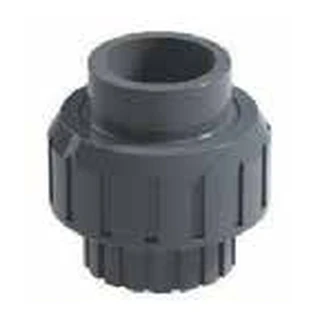
Existing native NOVA media334, retained from actual native bytes. Connection context only; this catalogue view does not demonstrate a gasketed joint, project compatibility or ASTM classification.
This separation also prevents a common review failure: one approval comment is interpreted as approval of the entire package. “Suffix clarified” should close the nomenclature issue only. If joint evidence is still missing, carry it as a separate open item with its own closure condition.
Source and scope
Original conceptual diagram derived from the adjacent ASTM public-scope explanation and article review method. It contains no test data, certification or product approval.
When only the trailing B differs
There is a credible historical explanation. In its 2016 cell-class technical brief, Uni-Bell says ASTM eliminated the trailing letter in a 1997 revision and recommends updating specifications. That explains why a supplier may use five digits without a letter. It does not establish that a particular offer was tested to that class, or transfer authority to rewrite your contract.
Lettered wording also persists in recent real documents. Hillsborough County’s October 2025 gravity-wastewater specification retains lettered cell classes while separately addressing product requirements and approval procedures. A Westlake swing-joint submittal entry uses 12454-B as well. Neither document is proof that a trailing B means defective or obsolete stock. These are named US examples, not rules governing every NOVA market or a recommendation to use either product on your project.
Use the suffix-only branch when the digits match and the manufacturer identifies the actual offered compound. Ask the manufacturer to explain the notation and edition on its declaration, supported by relevant evidence. Send the project reviewer both the original clause and that explanation. Request a recorded interpretation that identifies the product and the issue being closed. Until that response and the required evidence exist, keep the issue on HOLD; do not automatically reject the manufacturer or stamp the whole offer equivalent.
Source and scope
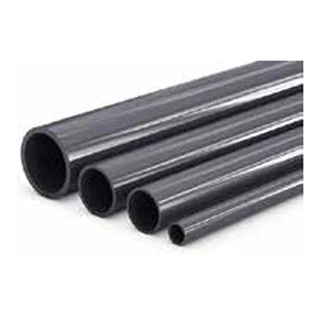
Existing native NOVA media329. Product context only: no readable D1784 cell-class marking or compound conformity evidence is visible. The article makes no classification claim for the pictured pipe.
When a digit changes, compare the property it changes
Do not treat 12364 versus 12454 as another suffix question. Uni-Bell’s published comparison assigns the third cell to tensile strength and the fourth to tensile modulus. Its values show why reading the complete code as one rising quality score fails:
| Cell class | Tensile strength, minimum (psi) | Tensile modulus, minimum (psi) |
|---|---|---|
| 12454 | 7000 | 400000 |
| 12364 | 6000 | 440000 |
In this comparison 12454 has the higher minimum tensile strength, while 12364 has the higher minimum tensile modulus. Uni-Bell explains the different importance of these properties for internal-pressure resistance and gravity-pipe deflection. That is a reason to examine the applicable product standard and design criterion, not to make an unrestricted substitution in either direction.
If the project specifies 12454 and the offer declares only 12364, the offer has not demonstrated the specified tensile-strength minimum merely because its modulus requirement is higher. The reverse substitution cannot be justified by strength alone either. Put the differing property and its requirement into the RFI. Actual evidence may establish an additional classification or support a proposed deviation, but a reviewer must evaluate that evidence; the article’s comparison does not award a second class.
Source and scope
Source: Uni-Bell2016 cell-class technical brief linked in this section. Values are classification minimum requirements, not NOVA tests. Separate zero-based scales prevent a false overall score. The adjacent semantic HTML table preserves every value.
When the offer contains an ISO product sheet but no D1784 declaration
An ISO sheet can be relevant product evidence without answering the compound question. NSAI’s abstract for the identical ISO 1452-2:2009 adoption concerns solid-wall PVC-U pipes and associated product characteristics and test parameters. Its scope is different from the D1784 compound classification. Neither scope makes a supplier’s product sheet a compound test record.
Suppose the submitted sheet names ISO 1452, a PN class and Vicat data but contains no D1784 classification declaration. Record the compound requirement as not demonstrated. Do not infer 12454 from PN, MRS, a softening value or a few apparently similar properties. Such an inference would skip the applicable classification methods, conditions and missing properties, as well as the link to the offered compound.
The next decision has two distinct routes. The manufacturer can provide the requested D1784 declaration and supporting evidence for the actual offered compound. Alternatively, it can identify its product as a proposed deviation and supply the evidence the authorized reviewer requires to assess it. If neither route closes, the disputed item remains unreleased. This is an evidence disposition, not a finding that all ISO products are inferior or unsuitable.
Run one review sequence before writing the RFI
Use a separate record for each offered product or genuinely shared evidence package. A maker’s explanation for one compound cannot silently cover a different formulation or a fitting from another source. The following sequence is a document-review method; project procedures determine who can approve and at what stage.
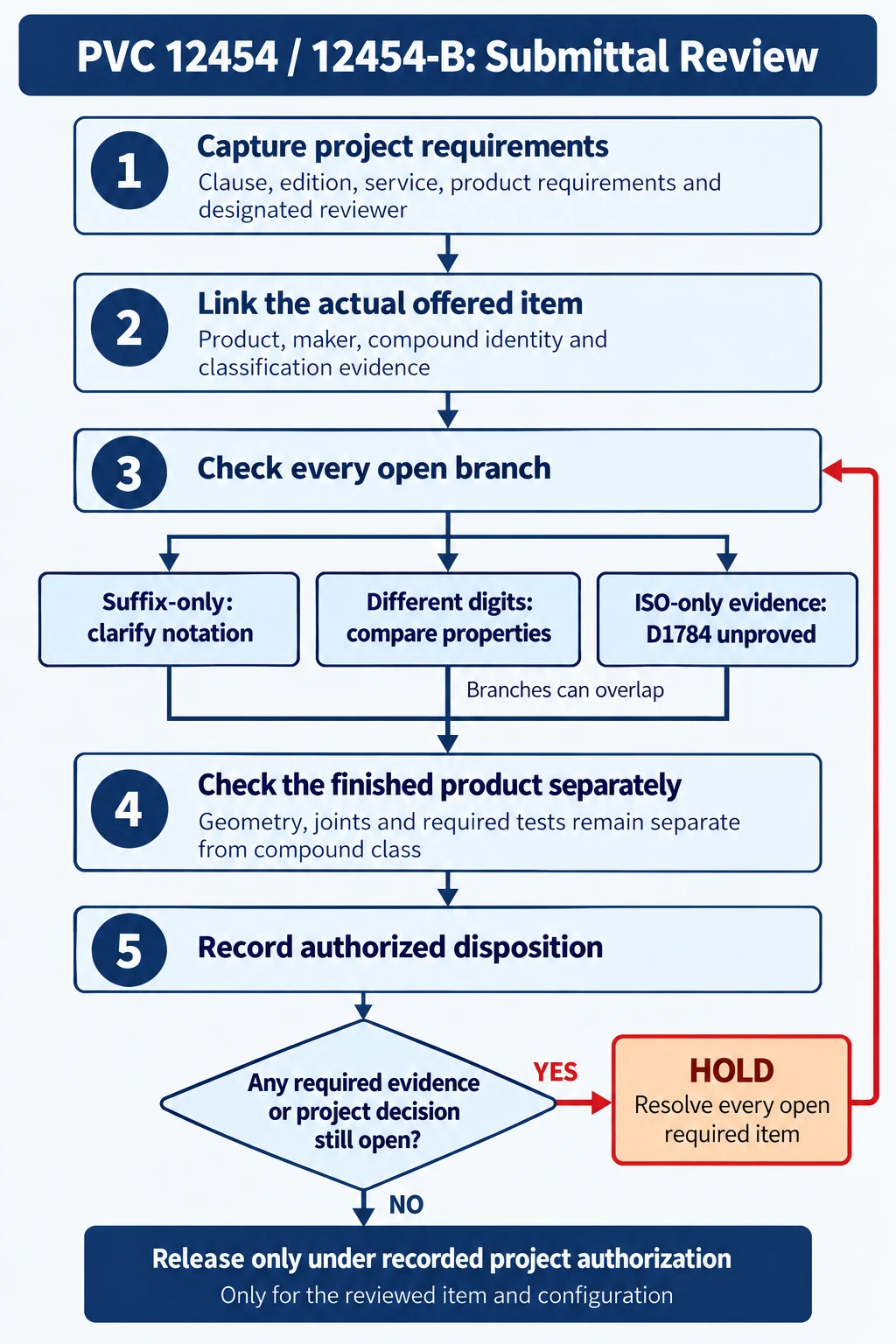
- Capture the requirement. Record the clause, edition, product standard, service and reviewer responsible for interpretation.
- Identify the offer. Link the exact product and manufacturer to the compound declaration and supporting records. If the link is missing, mark compound conformity unproved.
- Choose every applicable branch. Matching digits with a suffix difference require notation clarification; different digits require property comparison; ISO-only evidence leaves the D1784 claim open. More than one branch may remain open.
- Check the finished-product package separately. Compare the specified geometry, joints and required tests against evidence covering the offered product. Do not close these from the compound code.
- Request and record the decision. Obtain the designated reviewer’s interpretation or deviation decision, and preserve every remaining condition. HOLD the disputed item while a required item remains open.
Source and scope
Built-in image_gen explanatory workflow, editedv2; not a project approval. The numbered five-step sequence above is the complete textual alternative.
A branch can close while the overall result remains HOLD. For example, a reviewer may accept the manufacturer’s explanation of the omitted B but still require product-joint evidence. Recording both results makes the next submission specific and prevents the same nomenclature argument from being repeated instead of resolving the remaining technical issue.
A completed RFI example with a usable HOLD decision
Hypothetical training record: the project, manufacturer, document IDs and responses below are invented to demonstrate the review method. The distinction between compound and product evidence comes from the sources above. This is not a NOVA offer, customer case, certification or engineering approval.
RFI PVC-01 · Open · Disputed item on HOLD.
Requirement: Assumed project clause P-12 calls for PVC compound 12454-B and separately specifies the finished pipe’s product standard, dimensions and gasketed joint. The clause gives no D1784 edition. Project reviewer: the engineer designated in the assumed submittal procedure.
Offer received: Assumed Manufacturer M, Product X, sheet X-01, declares ISO 1452-2 and a PN class. Cover letter M-01 says “compound 12454” but gives no D1784 edition, classification evidence or compound identifier linking that statement to Product X. The required gasketed-joint evidence is absent.
Review finding: Digits match the project’s stated digits; a suffix-only explanation is plausible but not yet established for this offer. Compound conformity is unproved because the declaration is incomplete and unlinked. Product-joint conformity is independently unproved. The ISO sheet closes neither gap.
Requested manufacturer response: Identify the compound used for Product X; provide its signed D1784 declaration, edition and supporting classification evidence; explain the missing B; identify the exact product configurations covered; provide the specified joint evidence or explicitly list the proposed departure.
Requested reviewer decision: Confirm the applicable edition and whether the documented five-digit declaration satisfies the lettered clause for this item, or requires a formal deviation. Separately determine whether the finished-product and joint evidence satisfies the project requirements.
Closure and release condition: Keep Product X on HOLD until the required compound evidence is linked to it, the notation issue has a recorded project disposition, and the finished-product/joint requirements or approved deviations are closed under the project procedure. Record the decision reference and the exact products and configurations it covers.
Now change the reply: Manufacturer M submits a declaration for 12364 instead. The finding changes from potentially suffix-only to a substantive property difference. Against an assumed 12454 requirement, Uni-Bell’s comparison shows the strength minimum is not established by a 12364 declaration. Request evidence that resolves that specific requirement or a proposed deviation; an explanation of the letter alone cannot close it.
Change a different condition: M supplies satisfactory linked 12454 evidence, the engineer records acceptance of the notation, and the required product evidence is accepted. The record can then move from HOLD to the release state authorized by that project’s procedure, limited to the reviewed item. An unresolved joint requirement would keep it on HOLD even after the compound issue closes.
Make the last line identify what is actually released
A useful closing entry names the reviewed manufacturer, product, configurations, document revisions, decision reference and any conditions. Avoid “PVC approved” when only one item was reviewed. If a later submission changes the compound, dimension series or joint, check whether the existing decision still covers it before relying on that release.
The Hillsborough example demonstrates why the approving authority matters: it has its own documentation, design-exception and alternative-material process. Use your project’s actual process rather than importing that county’s procedure into another country. A supplier’s compliance statement and an authorized project acceptance are different parts of the record.
Conclusion
Compare the digits before debating the letter. If only B differs, resolve the notation with linked manufacturer evidence and a recorded project interpretation. If digits differ, compare the changed property. If only an ISO product sheet exists, keep the D1784 claim unproved. Release the disputed item only when its required compound, product and project decisions are closed; preserve the scope of that release.
Frequently Asked Questions
Does B in 12454-B prove the pipe is grey?
Do not use that suffix as colour evidence. Uni-Bell describes the trailing letter as historical; identify colour from the actual product and applicable specification.
Should I reject a submittal because it still says 12454-B?
No. The letter alone does not establish defective material; check the declaration, product evidence and project interpretation before deciding.
Can a higher PN class close the compound RFI?
No. PN is not a D1784 classification record, and a pressure claim does not resolve the missing compound evidence.
Does closing the suffix issue approve every product in the catalogue?
No. Record the manufacturer, product and configurations covered by the decision; other products and unresolved product requirements need their own review.