Automatic Disc Filter Backwash Acceptance for Irrigation
A controller can record a successful backwash while an open irrigation zone falls below its delivery requirement. Use the same witnessed cycle to make two decisions. Accept the filter sequence when the approved trigger, wash, and return to filtration are demonstrated. Accept zone service when the named zone meets its delivery limits through cleaning, or when an approved pause ends with a witnessed restart and recovery within project limits.
Record a separate result for each. A full filter-sequence pass can sit beside a zone-service failure. An unexplained loss of delivery cannot be signed off as an engineered pause.
Key Takeaways
- Name the zone, the operating load, and the acceptance measurement point before calling the test.
- Record why the wash started. A manual command gives evidence for the stages it exercises.
- Match controller events to physical observations on a shared timeline.
- Follow the approved service mode. Continuous delivery and an engineered pause have different pass conditions.
- Keep filter and zone dispositions separate, including when one test result is still open.
Agree what counts as a pass before the cycle
Start with the approved control sequence, the installed filter and controller instructions, and the irrigation acceptance schedule. Put the document revisions and equipment IDs on the witness record. Trace the filtration path, wash water supply and waste outlet on the approved drawing. Identify the stage or filter that should wash first, the permitted valve and pump states, and the conditions required for return to filtration.
For the zone record, name the operating zone and any other demand included in the test. Identify whether the project calls for delivery during cleaning or permits a pause. Write down the approved pressure and flow criteria where specified, the points at which they apply, any allowed service interruption, and the event from which the recovery window is measured. Bring unclear criteria back to the project authority before accepting service. For example, an approved operating sequence that closes a field valve still needs a service criterion for when delivery must resume.
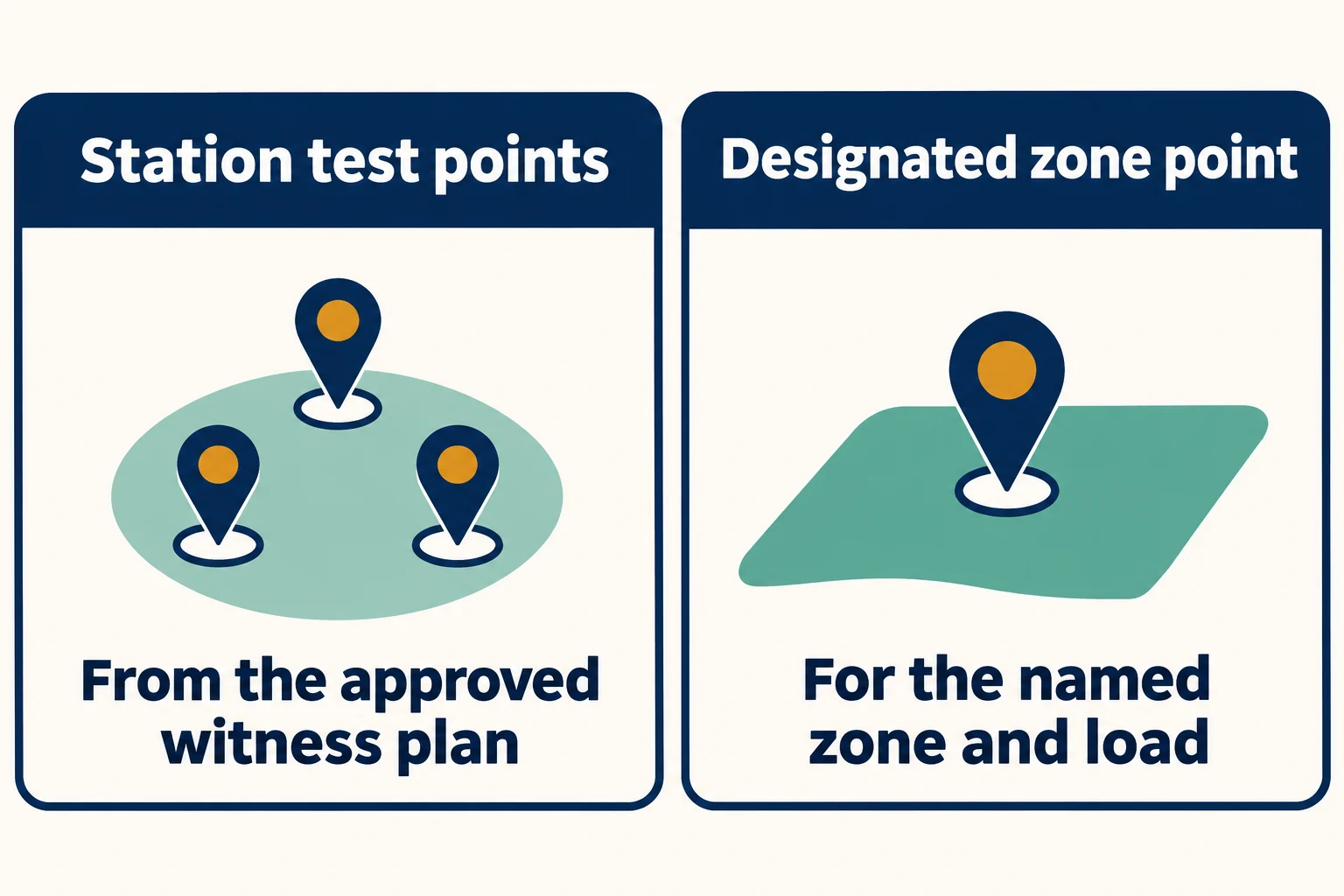
Take the pre-wash readings at the project test points while the named load is running. Log filter inlet and outlet readings and differential pressure as required by the witness plan. Record the zone readings separately. If a downstream branch is under procurement, the IFANNova HDPE irrigation pipe and compression fittings range is a reference for its piping schedule. The witness record should identify the installed branch and its measurement point.
Witness the automatic disc filter backwash
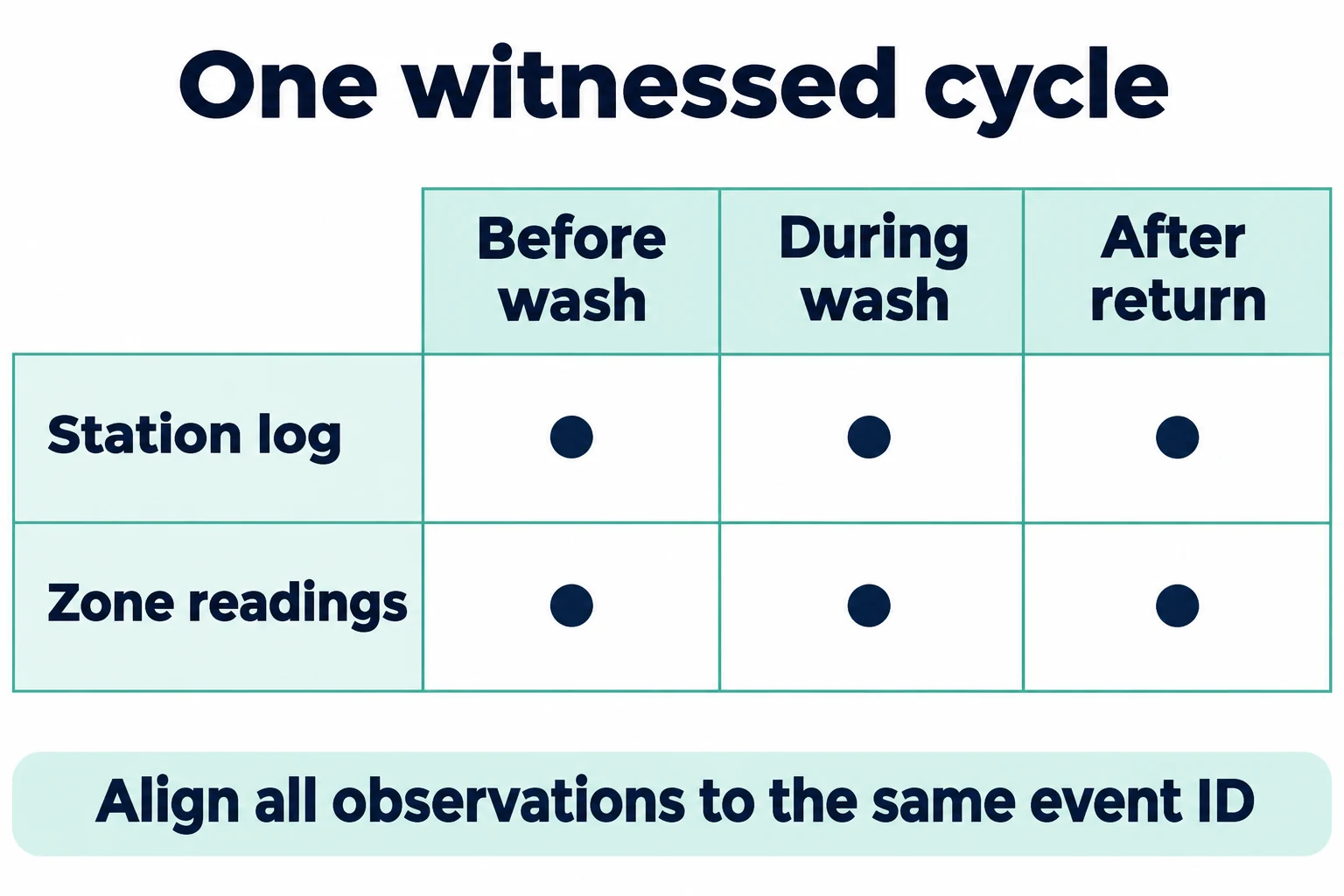
Have the authorized operator run the approved witness plan. Use a shared timeline for the controller log, station readings and zone readings. Choose the observation interval from the plan so the record captures the wash stages and transitions that the project needs to assess. A before-and-after pair can miss an interruption between those readings.
On the Netafim Spin Klin Angle Apollo Battery, the manual describes filtered wash water reaching the washing unit from the other filters through the outlet manifold. It describes the first filter returning to filtration before the controller starts the next. If that sequence applies to the installed battery, record both events in order. A controller output is evidence of a command. Use the physical indication specified in the witness plan to establish the corresponding valve or hydraulic response.
The Netafim AlphaDisc BLE guide describes a manually initiated cycle during initial operation. Its troubleshooting section distinguishes inlet, outlet and differential pressure during filtration from downstream pressure during backwash. These are two useful distinctions for acceptance. The test trigger determines what the start of the record proves, and each pressure reading belongs to a named point and state.
| Stage | Evidence to match to the approved sequence | Disposition |
|---|---|---|
| Start | Record the baseline, actual trigger and start time. For a required automatic trigger, capture the qualifying input and the controller response using the approved method. | Pass the trigger tested when the input and response agree. Leave the automatic trigger open if the test used only a manual command. |
| Wash | Record the stages actually observed, the approved confirmation of valve response and discharge at the identified waste route. Compare required hydraulic readings and timing against the installed equipment and project criteria. | Pass this stage when the observed order, states and required readings meet the criteria. Mark a mismatch as a failure. Missing confirmation leaves the stage open. |
| Return to filtration | Trace the end of wash to the specified filtration state. Check the waste and valve states and the required filtration readings. For a sequenced bank, capture each return or transition the approved sequence calls for. | Pass the return when the required states and readings are witnessed. Close the entire station record only when all required stages and trigger paths have passed. |
If the approved sequence has both timed and differential-pressure initiation, log which input actually initiated each witnessed cycle. A timed cycle can pass its own trigger check while the differential-pressure initiation remains open. Keep the controller’s trigger indication with the corresponding time or pressure record so a timer event cannot be mistaken for a differential-pressure response.
Give the irrigation zone its own result
The Irri-Gator Products Gator 2000 operator’s manual provides a separate controller example. Its filter flushing settings distinguish the main valve position during flushing from whether to close the field. On a project with an approved pause, record the field action and its timing as well as the commanded or observed main valve state required by the plan. Use the installed equipment and approved project sequence to establish which states apply.
If the zone must irrigate during backwash, compare the readings for the required wash interval against the zone service criteria. A station outlet gauge can read acceptably while the named zone misses its threshold at the designated field point. If the approved program pauses the zone, time the pause and the recovery from the events defined in that program. A reopened valve tells you that the restart has begun. Recovery is shown by delivery at the specified point within the allowed window.
One event, two acceptance checks
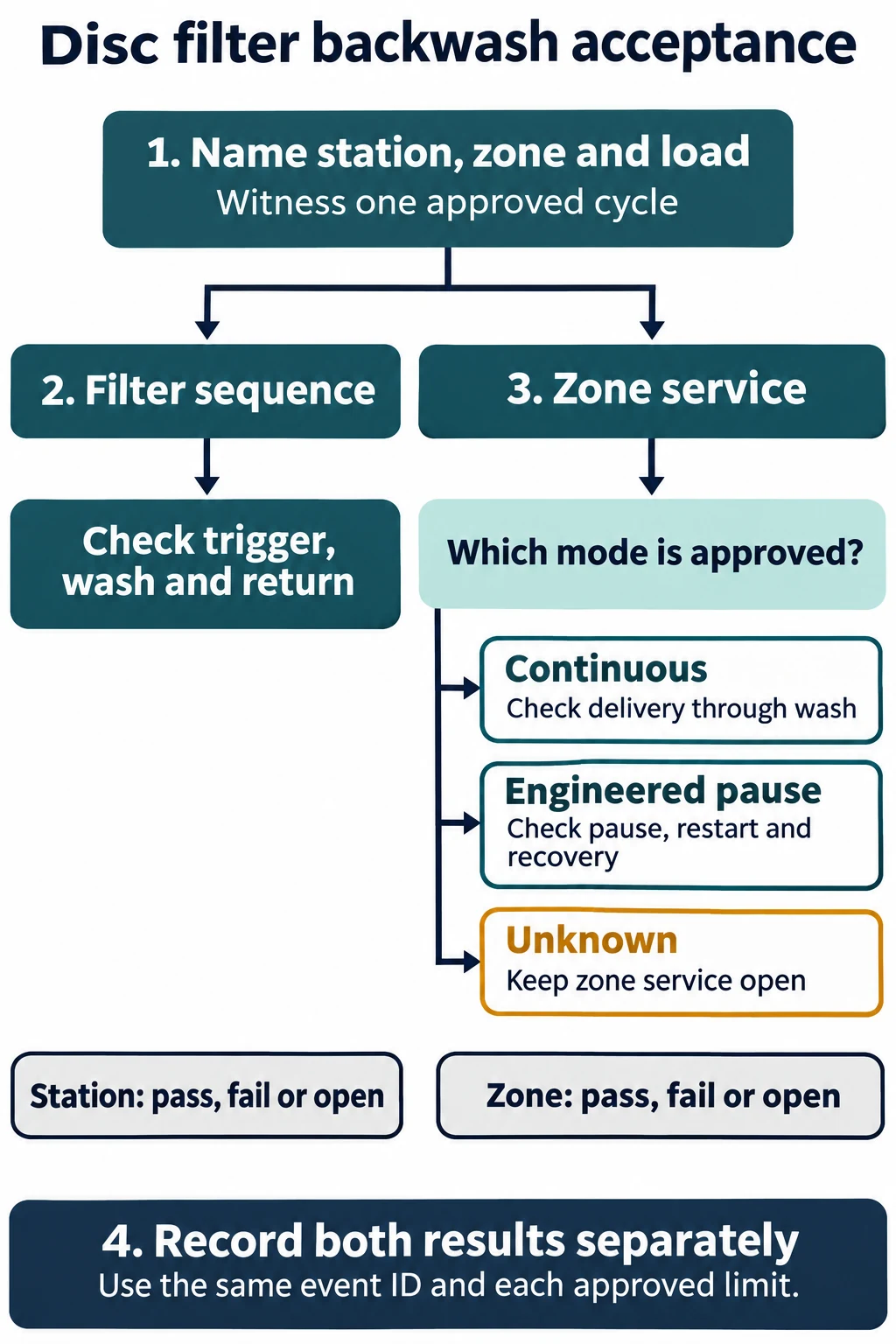
- Name the station, irrigation zone and approved operating load. Have the authorized operator witness the approved cycle and align observations using one event ID.
- For the station, verify the trigger that actually ran, the witnessed wash stages and return to filtration. Record the station as pass, fail or open. Keep any untested required trigger path open.
- For the named zone, check the designated point during continuous delivery if that mode is approved. For an approved engineered pause, verify pause timing, restart and recovery. Keep service acceptance open if its governing mode or evidence is missing.
- Record both results separately using the same event ID and the project limits. A measured mismatch is a failure. Assign the owner and retest scope for any failed or open result.
| Approved mode | Witness observation | Zone result |
|---|---|---|
| Concurrent irrigation | The named zone stays within its specified delivery limits through the wash and meets the post-cycle criterion at the designated point. | Pass for the witnessed zone and load. |
| Concurrent irrigation | The field-point reading drops below its approved minimum beyond the allowed tolerance during a wash stage. It recovers afterward. | Fail the concurrent-service requirement. Preserve the separate filter pass and retest zone service after the issue is addressed. |
| Engineered pause | The pause starts as specified, stays within the permitted duration, and the zone restarts and recovers at the designated point within the approved window. | Pass for the approved pause and recovery. |
| Engineered pause | The valve reopens on time, but delivery reaches the approved range after the recovery deadline. | Fail the recovery requirement even though valve restart passed. |
| Mode unconfirmed | Zone delivery stops and resumes. The approved documents do not establish whether an interruption was allowed. | Keep service acceptance open. Obtain the governing mode and limits, then assess the retained record or repeat the witness if needed. |
These are illustrative dispositions, with no assumed pressure, flow or time values. When the test misses the critical interval or the specified field point, mark the affected service claim open. A recorded result outside an approved limit is a failure. Tag it to the affected stage and attach it to the project exception record.
Close out the witness with two entries
Use one event ID for the station record and the zone record so the person signing can match a service dip to the wash stage that was active. Include the equipment and zone IDs, test load, sequence revision, trigger, measurement points, timestamps, project limits and references to the retained observations. State each result as pass, fail or open and name the responsible acceptance authority under the project plan. For a failed or open item, assign the corrective action or missing test to an owner and record the required retest scope.
For example, a record can read Filter sequence: pass. Concurrent zone service: fail during the second wash stage. Retest: same approved load, field point and concurrent-service criteria after correction. That gives commissioning and handover teams a specific service exception to close while retaining the station evidence for the witnessed run. Any change to the approved configuration can affect the scope of the retest.
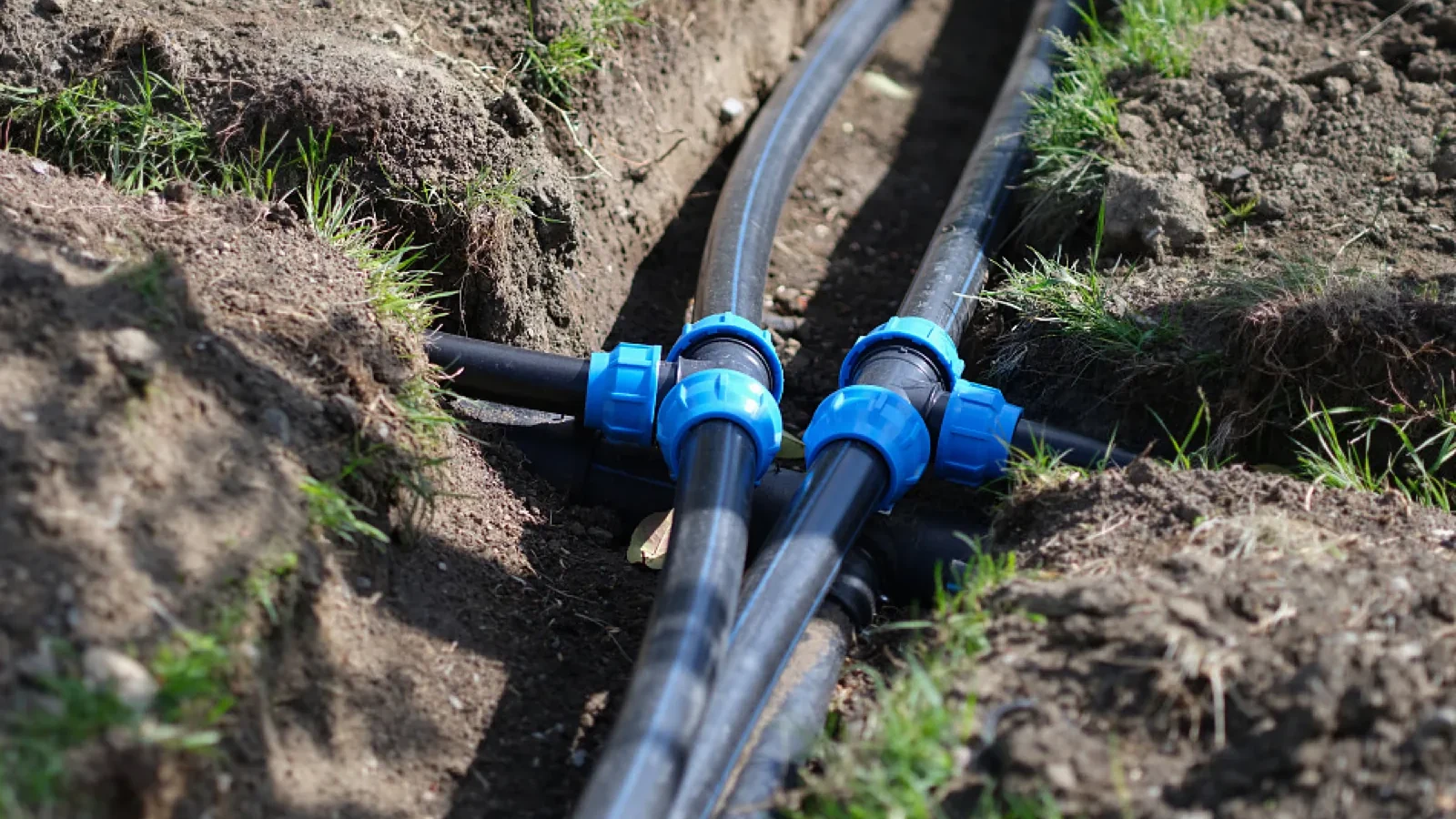
For the irrigation piping scope, submit your HDPE irrigation piping schedule to IFANNova with pipe diameters, required compression fittings, quantities and the destination market.
Conclusion
Close each result on its own evidence. The station record shows whether the approved backwash sequence ran. The zone record shows whether the named zone received the approved service during cleaning and after filtration resumed.
Frequently asked questions
Can a manual flush pass automatic backwash acceptance?
It can support acceptance of the wash and return stages it exercised. A required automatic trigger stays open until the qualifying input and automatic response are demonstrated.
Is a brief loss of irrigation during backwash acceptable?
Use the approved service mode and limits. Verify timing, restart and recovery for an engineered pause, or compare the actual interruption to the concurrent delivery requirement where that mode applies.
Where should pressure be measured during the test?
Use the filter readings specified for station acceptance and the designated downstream point for zone service. Record where and when each reading was taken so it can be compared with the applicable limit.