
Magnetic Flowmeter Grounding in Plastic Pipe: Check the Manual
Removing a grounding-ring line from a quotation can leave the plastic-pipe connection unresolved. Do not omit a magnetic flowmeter’s grounding rings merely because its quotation includes a reference electrode. Match the exact sensor, manual revision, pipe and service to the manufacturer’s permitted process-reference arrangement. Rosemount’s October 2025 8700 guide, for example, does not recommend its reference-electrode option for non-conductive pipe. If that model match or the wetted mechanical detail is missing, keep the ring-omission decision on hold; protective earthing remains a separate requirement.
Keep the decision next to the offered configuration. The useful procurement record says whether to retain the specified rings, assess a documented permitted alternative, or hold an incomplete offer—and preserves the model and document conditions behind that choice. A general grounding explanation cannot select the outcome.
Key Takeaways
- Classify the electrical path at the liquid, rather than by the visible flange material.
- Read the exact sensor’s installation instruction, including its revision and pipe-category row.
- A general technical note cannot authorise an option that the applicable model guide does not recommend.
- A built-in third electrode and a plastic-pipe ring instruction can coexist in the same manual.
- Record ring or protector material, gasket stack and installed length before releasing the interface.
- Unknown chemistry, conductivity or cathodic-protection conditions prevent a completed ordinary-water selection.
Identify the liquid-contact path and separate process reference from safety earth
Two different functions need evidence. The process reference gives the measurement system an electrical relationship with the liquid. Protective earthing addresses electrical safety. Rosemount’s 8700 quick install guide, October 2025, page 23, says its process-reference figures do not show the separately required safety-earth connection. A completed item on one drawing therefore cannot close the other item automatically.
| Pipe beside the sensor | Electrical question | Review classification |
|---|---|---|
| Plastic or FRP | The pipe wall does not provide the liquid-contact metal path. | Use the non-conductive-pipe instruction. |
| Metal with an insulating internal liner | The outside metal can be bonded while the liner isolates the liquid. | Use the applicable lined-pipe instruction. |
| Conductive, unlined metal | A liquid-contact path may be available through the pipe. | Check the conductive-unlined arrangement and its connections. |
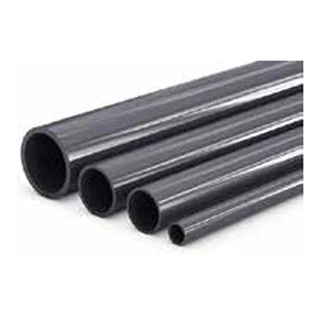
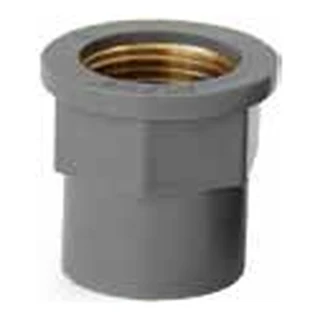
A steel backing ring behind a plastic flange remains outside that plastic wetted wall. Its presence does not turn the assembly into the conductive-unlined case. Record the pipe, liner and actual liquid-contact element, then consult the matching row. This classification identifies the instruction to read; it is not a wiring design or approval of the complete meter.
Compare the exact meter manual before accepting a ring omission
“Reference electrode included” describes a feature. It does not state which applications the manufacturer permits it to serve. The relevant evidence is the exact product’s instruction for the stated piping and service, not whichever general article gives the simplest answer.
| Product and document | Applicable statement | Ring-omission disposition |
|---|---|---|
| Rosemount 8700 sensor; quick guide 00825-0100-4727, Rev DG, October 2025, Table 5-1 | For non-conductive pipe, straps are insufficient; the reference-electrode option is not recommended. Rings and lining protectors point to Figure 5-3. | Do not accept an electrode-only substitution under this cited non-conductive row. |
| Yokogawa CA Series; IM 01E40A01-01EN, first edition September 2022, printed page 13 | The plastic-pipe instruction requires a grounding ring and specifies adjoining gasket arrangements. | Retain that ring requirement with the corresponding gasket detail. |
| B METERS MAG; User Manual v2.0, section 6, page 49; publication date not established here | It describes a third electrode, recommends rings for plastic/coated pipe and also calls the rings indispensable for that pipe condition. | The electrode sentence alone provides no basis to delete the ring instruction. |
| Quotation without an exact sensor identity or applicable manual | No demonstrated match between the offered configuration and a permitted arrangement. | HOLD: identify the sensor and applicable instruction before accepting omission. |
Sources: Rosemount Rev DG, Yokogawa CA first edition and B METERS MAG v2.0. These are document-reading examples, not IFANNova product specifications.
Rosemount’s 2024 Rev BB technical note discusses ground electrodes and rings in general application guidance. Read it alongside the specific installation guide, rather than treating its general description as permission to disregard Table 5-1. The two documents have different jobs. This comparison does not establish that every Rosemount product, earlier edition or installation has the same option restrictions.
Consider an illustrative quotation for a plastic-pipe installation. It names a reference electrode but not the sensor variant or applicable installation revision. The first disposition is HOLD because the manual match is absent. If the supplier subsequently establishes that the cited 8700 Rev DG instruction applies to this offer, its non-conductive row still does not support the proposed electrode-only arrangement. The next disposition is to retain and resolve the permitted ring or lining-protector configuration, not simply close the item because an electrode was found.
Changing the pipe to conductive lined metal changes the row to examine. The cited table points its reference-electrode option to a different figure for that condition. This does not automatically approve the altered assembly; it shows why a conclusion must retain the pipe classification as well as the product reference. A valid alternative is established by a matched instruction, not by transferring an option from a neighbouring row.
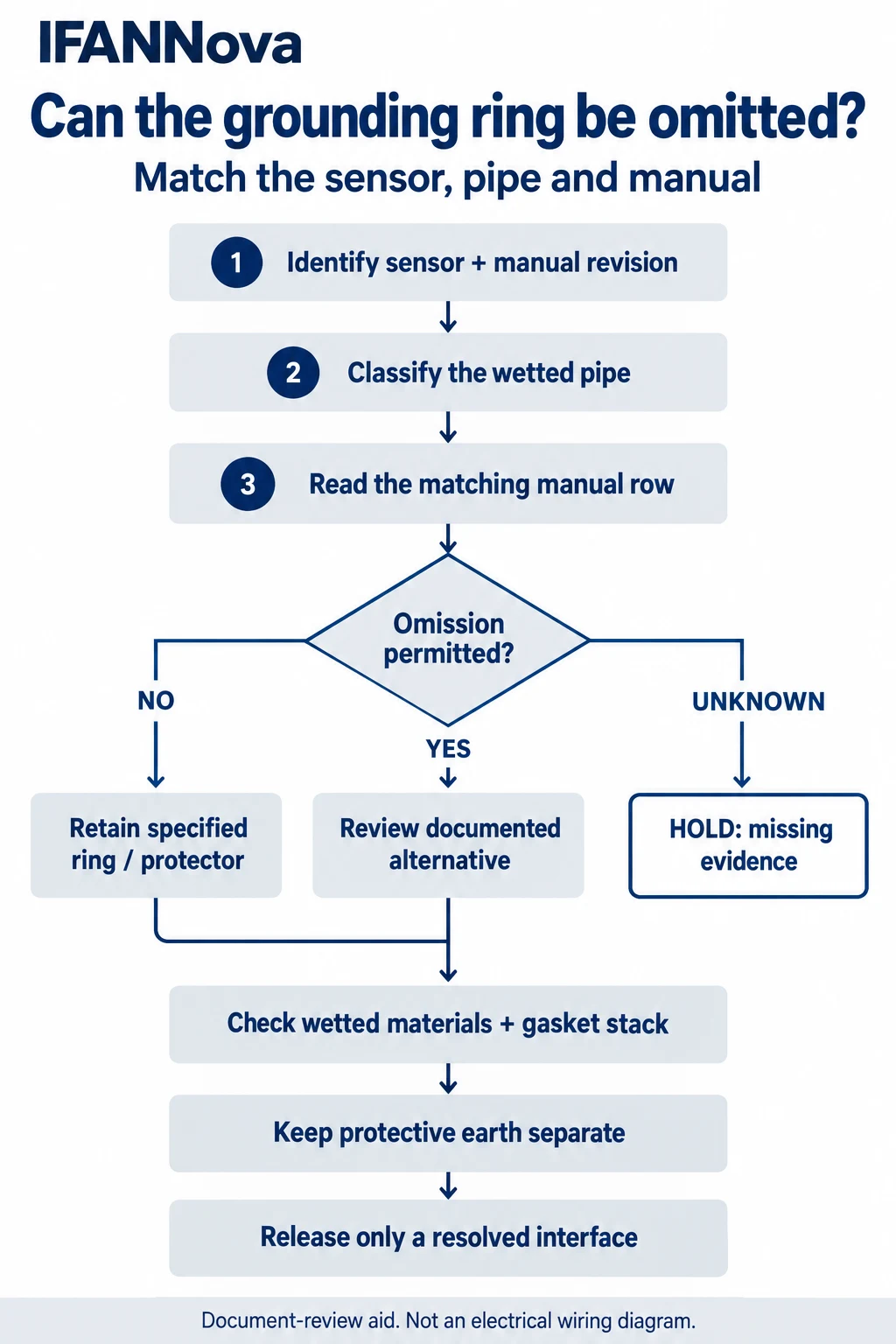
- Identify the exact sensor and manual revision.
- Classify the wetted pipe as plastic/FRP, lined metal or conductive unlined metal.
- Read the matching manual row and preserve its model, pipe and service conditions.
- If omission is not permitted, retain the specified ring or protector; if permitted, review the documented alternative; if unknown, HOLD for missing evidence.
- Check wetted materials and the gasket stack, keep protective earth separate, and release only a resolved interface.
Record the wetted and mechanical interface
Resolving the process-reference option does not finish the purchase detail. A ring or lining protector is a wetted component and part of the mechanical assembly. Its material, sealing arrangement and installed space must match the actual meter and mating pipework. Pipe compatibility alone cannot establish ring or gasket compatibility.
The CA Series drawing illustrates why an electrical accessory cannot be copied independently of its assembly. It identifies gasket positions on the customer-pipe and sensor sides, with instructions for plastic piping. A ring item on a bill of materials without the corresponding gasket detail leaves the interface incomplete. Use the selected model’s applicable arrangement; do not transfer the CA gasket instruction to a different sensor.
| Item | Record | Disposition rule |
|---|---|---|
| Sensor identity and instruction | Exact model/variant, installed size, liner, manual number and revision | Unknown or conflicting identity: HOLD the option decision. |
| Permitted process contact | Matched ring/protector/electrode arrangement and figure | A prohibited or unrecommended substitution is not accepted merely to remove an accessory line. |
| Wetted materials | Liquid, chemistry, temperature and approved component materials | Incomplete service data: HOLD material selection. |
| Mechanical assembly | Gaskets, mating faces, installed face-to-face length and applicable assembly instruction | Missing stack-up or unsupported flange condition: HOLD spool release. |
| Electrical responsibilities | Process-reference and protective-earth information assigned to the appropriate reviewer | A mark against one function does not close the other. |
For example, a completed manual comparison may reject omission and retain the approved ring arrangement, while the mechanical card remains open because gasket and face-to-face dimensions are missing. Those are two separate dispositions. Purchasing can preserve the required accessory without pretending that the spool is ready for fabrication.
For the related plastic-pipe assembly task, Review the plastic-flange assembly conditions. That guide concerns when a flange instruction applies; it does not supply a torque for this meter or confirm an IFANNova flange, spool or ring offering. The selected sensor and actual pipe/flange instructions must cover the final arrangement.
Stop the order when service or electrical conditions change
The public procurement question behind this topic concerns magnetic meters in FRP pipe carrying an acidic medium, with uncertainty about ring metallurgy. That is a real selection problem, but it cannot be answered by declaring one stainless grade adequate. “Acidic” does not identify the chemical, concentration, temperature or exposure conditions, and the ring interacts with other wetted meter components.
A usable preliminary record for that question is: non-conductive wetted path identified; exact sensor and manual to be matched; ring-omission decision unresolved until the permitted arrangement is established; ring and gasket materials on HOLD pending service-specific evidence. This keeps the mechanical and chemical questions visible instead of treating an electrical-reference decision as material approval.
Have the instrument supplier review conductivity and the proposed wetted combination for the actual service. If cathodic protection, electrolysis or significant imposed process potentials are present, involve the responsible electrical designer as well. Rosemount’s technical note explains that these cases can need arrangements different from ordinary applications. Do not extend a general common-earth connection into a special process, or remove protective earthing based on a simplified process-reference diagram.
Changing service after the card was prepared reopens the affected decisions. Ordinary water to a chemically treated or cleaning service can reopen material compatibility. A revised pipe liner can reopen the electrical classification. A different sensor revision can reopen the permitted option. Keep the reason for reopening beside the changed input; the rest of the record remains evidence of what was reviewed, rather than authority for the new condition.
No magnetic meter, grounding ring or electrical-installation service is confirmed as an IFANNova offer here. The article helps a piping buyer coordinate a documented interface with the specialist instrument selection. Any proposed pipe or fitting supply requires its own specification and availability confirmation.
Conclusion
Retain the specified rings when the matched instruction requires them; assess an alternative only within a documented permitted arrangement. Neither outcome clears missing service data, wetted materials or gasket details. Keep protective earth separate.
If those inputs remain open, issue a specific HOLD and name the evidence needed next. That leaves purchasing with a usable disposition while the unresolved interface stays visible.
Frequently asked questions
Does a built-in third electrode make external rings optional?
Only the applicable model instruction can establish the permitted arrangement. B METERS’ cited manual describes the electrode and still gives plastic-pipe ring instructions.
Does a steel backing ring make plastic pipe conductive?
It does not establish liquid contact through the plastic wall. Classify the actual wetted path before selecting the manual’s row.
Can one ring material be specified for every acidic liquid?
No. Match the actual chemistry and exposure to the selected meter’s approved wetted materials; keep an incomplete service on hold.