Chemical Resistance Tables for PVC-U, CPVC, PP-R and PE: What the Ratings Mean
The Plastics Pipe Institute’s TR-19, dated April 28, 2023, places its chemical-resistance table within a non-pressure application scope. That qualification changes how a favorable cell should be used: it can help screen a material, but it does not approve a pressurized pipe system. PPI TR-19, scope and §6.
A chemical-resistance rating is valid only within the named table’s material and exposure conditions. Match its exact grade, chemical, concentration and temperature, read its legend and notes, and treat the result as screening evidence. Pressure, stress, mixtures, seals and joints can require additional manufacturer evidence before a complete system is approved.
For a specifier comparing PVC-U, CPVC, PP-R and PE, the useful result is a traceable assessment: a candidate is screened, rejected at the stated condition, or not supported by the available evidence. Those outcomes prevent a supplier’s chart, a resin name and a water-pressure rating from being mistaken for the same permission.
Key Takeaways
- Use the named source’s material scope and legend. Letter codes do not carry one universal meaning.
- A blank or dash can mean missing data; it is not a favorable rating.
- Match chemical identity, concentration and temperature, including cleaning and upset exposure.
- Favorable unstressed immersion evidence does not establish pressure-service suitability.
- Assess mixtures, cement grades, seals, valves and metal inserts separately.
- Keep a screened candidate provisional until the specific manufacturer’s evidence covers the complete application.
Watch this overview of chemical resistance in plastics as material-selection context. The article below explains how to qualify an exact pipe grade and service condition.
A rating is a conditional material result
Begin with the document, not the color of the cell. Identify who issued the table, its revision, the materials it covers and the kind of exposure behind its ratings. A table for laboratory containers, flexible tubing or an industrial pipe compound answers a different question. Even a piping reference may describe immersed specimens rather than a complete line carrying fluid under pressure.
PPI explains that its Table 3 data comes mainly from immersed plastic specimens, with some field experience. Detailed exposure times and property changes were often unavailable. Its stated use is therefore comparison of materials, with additional cautions for mechanical loading and chemical combinations. Reading that scope alongside the cell is part of interpreting the result, not an optional disclaimer. TR-19 §6, printed pages 8–10.
PPI TR-19 uses its own resistance codes. The following summary applies to that document’s Table 2 and Table 3; it does not translate a different manufacturer’s A, B or C categories.
| PPI code | Meaning in this source | What to preserve in the record |
|---|---|---|
| R to xx°F | Generally resistant up to the temperature stated in °F; resistance may be limited above it. | The chemical row, concentration, material and stated temperature; this remains within the source’s application scope. |
| L to xx°F | Limited resistance at the stated temperature. Compatibility at lower temperatures should not be assumed. | The limitation and exact temperature; obtain application-specific evidence rather than silently changing L to resistant. |
| N | Not resistant. | Reject the candidate for the matching material and exposure condition. |
| P | Pure concentration, subject to the document’s concentration note. | Exposure descriptor; not a resistance grade. For solids, this means saturated aqueous solutions. |
| — | Data unavailable; check with the piping manufacturer. | Not supported by this table. A missing result cannot clear the candidate. |
Source: PPI TR-19 §6 and Table 2, printed page 9; temperatures in this legend are Fahrenheit.
A maximum temperature printed beside R is not automatically the operating temperature allowed by the pipe, fitting or valve. It qualifies the chemical entry. The component’s mechanical limits and the intended pressure duty still need their own evidence. Conversely, PPI’s explicit warning beside L means that simply choosing a cooler operating temperature does not establish compatibility from that limited entry.
Match the named polymer and exposure to the row
“Plastic pipe” is too broad a description for a chemical assessment. Record PVC-U separately from CPVC, also called PVC-C in some references. Record the PP subtype, rather than substituting a generic polypropylene result for PP-R without checking the table’s coverage. For PE, identify the grade or product family that the source actually includes. A similar abbreviation is a reason to investigate the scope, not evidence that two products behave identically.
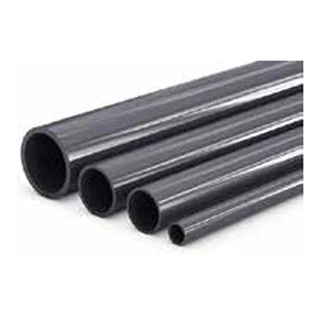
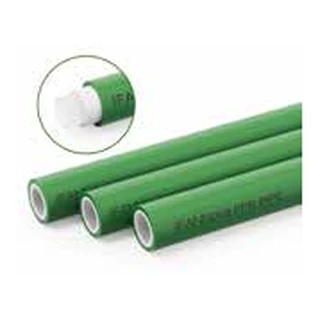
The public abstract of ISO/TR 10358:2021 illustrates the importance of that coverage: it names PVC-U, PVC-C, several PP types including PP-R and PP-RCT, and a defined PE-HD scope. It collects data over a range of temperatures. This is not a claim that every resistance table uses one room-temperature condition. Nor does the abstract supply a chemical rating for a NOVA product. ISO/TR 10358:2021, public scope.
Compound details matter after the family has been identified. A named manufacturer’s data may apply to its own formulation, not every pipe carrying the same polymer abbreviation. Corzan’s technical guide discusses differences in base resins and compound additives and advises working with the specific pipe and fitting manufacturer. Use that guidance to check the candidate’s evidence, rather than transferring a Corzan result to an unrelated CPVC product. Corzan chemical-applications guide, printed page 5.
Match the fluid with equal care. Its chemical name alone does not describe concentration, solvent carrier, additives or contamination. An SDS and process-fluid specification help establish the composition, but a broad ingredient range or an undisclosed additive still leaves an input unresolved. Do not substitute a pure-chemical entry for an aqueous formulation, or assume a commercial cleaner has the same composition as its principal ingredient.
Then record the full exposure range. A continuous temperature, a cleaning cycle and a short process upset are different conditions that may require different evidence. Duration and frequency also matter: brief occasional contact is not the same service as continuous exposure throughout the design life. PPI discusses concentration, temperature and stress as accelerating factors, including combined and cyclic effects. A general trend does not provide a numerical correction factor for a missing row. TR-19 §§3.3, 5.2 and 5.5.
If the exact combination is absent, retain the uncertainty. The next useful input is a rating or recommendation for the specific compound and complete exposure profile, not another broadly similar chemical name. An unexplained mismatch remains not supported even when several nearby entries look favorable.
One actual lookup: acetic acid at 25% concentration
Use one row from one edition before comparing polymers. PPI TR-19 (April 28, 2023), Table 3, printed page 11 lists acetic acid, CAS 64-19-7, at 25% concentration. Read that row with its Fahrenheit heading and Table 2 legend. The following transcription keeps the source’s material groups intact.
| Material named by PPI | Exact row entry | At a common 140°F condition | Product mapping boundary |
|---|---|---|---|
| CPVC | N | Not resistant in this source | No favorable screening result |
| PP (PP-R, PP-RCT) | R to 180°F | Within the listed R range | PPI expressly groups these PP materials |
| PVC | R to 140°F | At the listed R limit | Generic PVC entry; confirm the actual PVC-U compound |
| PE (MDPE, HDPE, PE-RT) | R to 140°F | At the listed R limit | Not an LDPE entry or a specific pipe approval |
Source: PPI TR-19, Table 3 printed page 11; Table 1 printed page 3; Table 2 printed page 9. The common 140°F condition (60°C) is a screening comparison within the published entries, not a new test result or a pressure-service temperature rating.
This row does not support choosing CPVC merely because it is often associated with higher-temperature piping. For the PP group, PVC and the covered PE group, the row supplies favorable non-pressure screening evidence at the common condition. It does not establish that those actual products, their joints or their seals are suitable. PPI names PVC generically; a PVC-U quotation still needs a documented match to its compound and application. PPI’s Table 1 expressly groups PP-R and PP-RCT with PP, and its PE definition excludes LDPE.
Change a material condition and the result must be reconsidered. At 160°F, the published PP-group entry still covers that temperature, while the PVC and PE entries above do not support it. That missing coverage is not an N rating: PPI explicitly says an R limit does not prove lack of resistance above it. A pressurised line remains outside this table’s approval scope at either temperature; obtain the specific system manufacturer’s matched chemical and mechanical evidence.
Why the pipe cell does not approve the system
A chemical can affect a plastic without immediately dissolving it. PPI distinguishes absorption-related changes, direct chemical attack and environmental stress cracking. Swelling or softening can change mechanical behavior; direct attack changes the polymer chemically. Environmental stress cracking involves a chemical agent together with inherent or applied stress. A specimen that looks satisfactory without load may therefore behave differently in a loaded installation. TR-19 §§4.1–4.3.
Internal pressure creates a mechanical question alongside the chemical question. Pressure cycles, restraint and installation stress can change the exposure being assessed. A water-service pressure rating does not establish chemical-service performance, and a favorable chemical cell does not provide the required pressure rating. Both permissions must cover the actual product and conditions; one cannot fill the gap in the other.
Some compatibility references explicitly flag possible stress cracking. It would be wrong to claim that this risk never appears in a table. The correct question is whether the source’s test conditions, warnings and recommendations cover the stress expected in this system. Where they do not, the lack of a warning is not evidence that a stressed application is acceptable.
Mixtures create a separate gap. PPI warns that combined chemicals can have a damaging effect even when the individual chemicals do not. Its Table 3 does not address chemical combinations. Reading every ingredient separately can identify a clear incompatibility, but favorable individual entries cannot demonstrate that the complete formulation is compatible. Where the combined effect is unknown, PPI recommends testing the actual mixture. TR-19 §5.3 and §6.
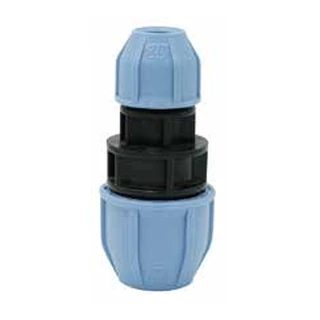
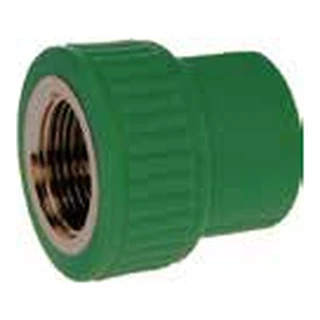
Every wetted component belongs in the assessment. A mechanical coupling may contain an elastomer seal; a union or valve may bring additional sealing materials into contact with the fluid. A PP-R transition can include a metal insert. Record those materials and models separately. A pipe-wall result says nothing definite about an unidentified seal compound or metal part.
Joining materials also need their proper scope. PPI notes that solvent-cement resistance can vary by grade and that mechanical-joint components can have different resistance from the pipe. “PVC cement” is therefore not a complete specification for chemical duty. Identify the actual cement, joint system and manufacturer recommendation. Fusion avoids introducing a separate cement material, but it does not remove the need to assess the pipe, fittings and operating stress. TR-19 §3.2.
Finally, include contact outside the bore. Corzan describes potential contamination from pump oils and plasticizers in gaskets, hoses or nearby materials. Its examples are specific to that material’s guide, but they explain why reviewing only the intended process fluid can miss an exposure. Any external chemical contact should be described to the actual system manufacturer. Corzan guide, printed page 5.
Record screened, rejected or unsupported
The same candidate can move between evidence states when a material condition changes. The three terms below are assessment labels for this article, not extra manufacturer resistance codes. They distinguish what the available evidence establishes from what the project still needs.
| Assessment | Evidence condition | Result and next action |
|---|---|---|
| SCREENED | Favorable entry matches material, chemical, concentration and temperature; retain scope and notes. | Keep the candidate for further assessment. This does not approve the complete system. |
| REJECTED | An explicit unsuitable entry matches the actual material and exposure condition. | Reject that candidate for that condition. Investigate a different candidate or a legitimately changed service. |
| NOT SUPPORTED | Evidence is missing, limited or mismatched; actual mixture, stress or components fall outside its scope. | Keep application approval pending. Name the specific gap and obtain evidence that addresses it. |
Consider a conceptual example, not a real chemical rating or customer installation. Assume a PPI R entry exactly matches a candidate material and a single fluid at the stated concentration and temperature. The proposed service falls within the table’s non-pressure scope. That entry screens the material for further evaluation. The assessment records the row and its conditions; it does not turn R into a guarantee of service life.
Now change the service to a hotter, pressurized mixture and leave the seal grade unidentified. The original favorable cell has not changed, but the evidence no longer covers the application. The assessment becomes not supported for the changed service: obtain mixture evidence, temperature coverage, pressure/stress recommendations and the actual seal specification. Selecting the lowest individual ingredient temperature or multiplying a guessed derating factor cannot resolve those gaps.
If an exact matching entry instead says N, the candidate is rejected at that condition. This differs from a dash, where the table has supplied no result. Limited resistance also needs careful wording: record the L rating, its temperature and the source’s limitation, then keep suitability not supported until application-specific evidence addresses it. Do not report L as either an automatic pass or a universal prohibition.
A compact record makes the conclusion reviewable by someone who did not perform the lookup. Preserve the source version and the actual row, not merely a colored screenshot detached from its notes.
Source, revision, table/page, chemical row, concentration basis, material or compound, temperature and units, code, legend and relevant footnotes.
Actual service profile, matched conditions, unresolved differences, screened/rejected/not-supported status, missing evidence and the person responsible for obtaining it.
For each missing input, state the rule after it arrives. An identified seal grade must have evidence for the complete fluid and exposure. A higher temperature needs source coverage at that condition. A manufacturer’s pressure recommendation must address the stated service, not only water at a different temperature. This turns “ask the supplier” into a defined verification task.
Seek complete-system manufacturer evidence
Send the manufacturer a service dossier that can be assessed without guessing. Describe the complete composition, including additives and credible contamination, and attach the available SDS or fluid specification. Give concentrations and their basis, continuous and intermittent exposure, cleaning chemicals and exposure duration. Identify any unresolved ingredient instead of hiding it under a generic fluid name.
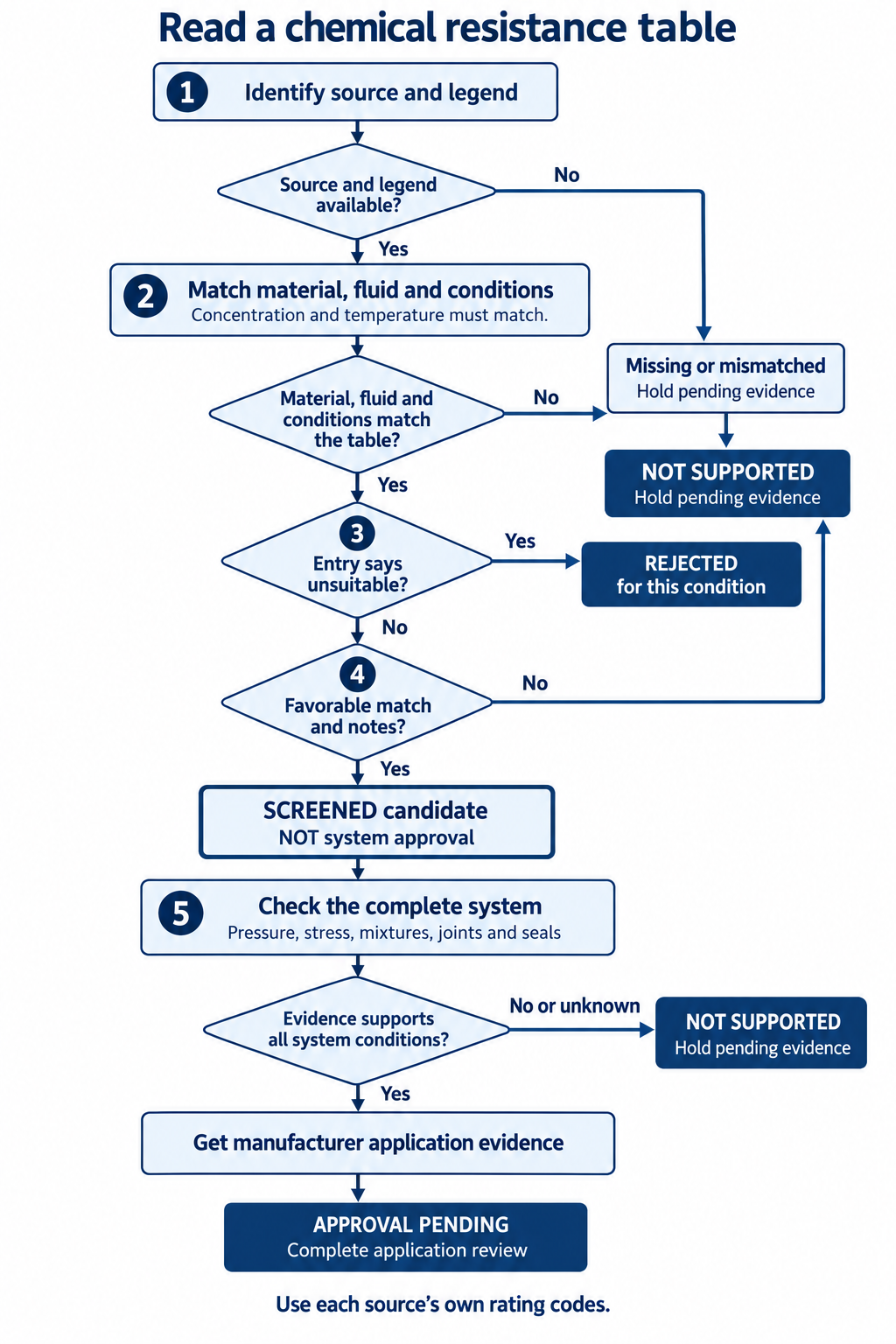
Use this review sequence
- Identify source, version, material scope and legend.
- Match polymer, complete fluid, concentration and temperature.
- Read the exact matching entry in its own legend.
- Check pressure/stress, mixture, joints and all wetted parts.
- Obtain manufacturer evidence for complete service.
Missing or mismatched scope or conditions: not supported. PPI N at an exact matching condition: rejected. An exact favorable match screens a candidate only. Obtain complete-system and manufacturer evidence; hold application approval until required evidence is resolved.
Include minimum, normal and maximum temperatures, with cleaning, upset and cyclic conditions distinguished. State operating pressure, vacuum where applicable and pressure cycles. List the pipe, fittings, valves, mechanical joints, cement, seal compounds and wetted metal parts by exact model or material identification. Add external chemical exposure and intended service life so a short immersion result is not mistaken for evidence covering years of service.
Ask for a written application recommendation that identifies the products and conditions it covers. The evidence should say which material and component questions are resolved and whether additional testing is required. A general catalogue claim of chemical resistance leaves the original task unfinished. Likewise, evidence for one compound cannot clear another compound, or an unidentified combination of seals and joints.
PPI recommends representative testing that duplicates expected field conditions as closely as possible when continuous mechanical stress or chemical combinations are involved. That is a manufacturer and engineering verification question, not a reason to improvise a chemical exposure test on site. Keep the approval pending where required conditions remain outside the available recommendation. TR-19 §6, printed page 10.
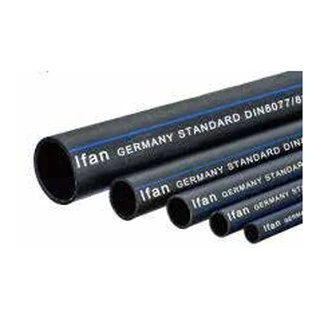
Use the catalogue to identify the components you intend to assess. Identify NOVA piping components, then assemble the fluid, temperature, pressure, joint and seal information for the specific manufacturer. Product listing is not evidence of chemical-service approval.
The decision can advance when the manufacturer’s recommendation covers the actual compound, complete fluid, operating profile and components, with any required testing resolved. If the reply excludes a cleaning cycle, does not identify a seal or addresses only an unstressed specimen, retain that precise open item. A useful assessment is allowed to end pending; it should never conceal what would be needed to change the result.
Conclusion
A resistance table gives conditional evidence about a material. Preserve its source, legend and exposure limits, then record whether the candidate is screened, rejected or not supported. Complete-system selection requires the remaining fluid, stress, joint and component questions to be resolved.
Keep the final specification traceable to the exact products and the manufacturer’s matched application evidence. That makes a favorable cell useful without asking it to prove more than it tested.
FAQ
Does a dash mean a chemical is safe for the pipe?
No. In PPI TR-19, a dash means data is unavailable and the piping manufacturer should be consulted. Another source may use symbols differently, so read its own legend.
Can a cooler temperature turn a limited rating into approval?
Do not assume that. PPI TR-19 explicitly cautions against assuming lower-temperature compatibility from an L entry. Obtain evidence for the actual condition and complete application.
Is rubber compatibility covered by the pipe’s resistance table?
Not automatically. Identify the seal compound and obtain its relevant evidence. ISO/TR 7620 addresses rubber chemical-resistance classification, but its public scope alone cannot approve a particular seal.
Are all chemical-resistance charts based on room temperature?
No. Sources can list different concentrations and temperatures. Read the actual row, units, test scope and footnotes before using a rating.
Technical references: PPI TR-19, April 28, 2023; ISO/TR 10358:2021 public scope; ISO/TR 7620:2005 public scope; Corzan CPVC chemical-applications guide.